Skip to content
Rep & Recovery

Compression · Compression Boots

Best compression socks for nurses

Twelve hours standing is a different problem from a 10K. Six socks ranked on published compression class, calf fit, how many pairs come in the box, and whether the top band still feels tolerable at hour nine.

By Stephen V.Updated How we review
#ad

We earn a commission when you buy through our Amazon links, at no extra cost to you. It never changes a verdict, and we say so when the cheaper product is the better buy. How this works.

For most nurses the right buy is the Physix Gear graduated 20-30 mmHg sock — it is in the compression class with the most support behind it, it ships two pairs per listing so one is always clean and dry, and it costs a fraction of the performance brands. If your feet and ankles swell by the end of a shift rather than just ache, the NEENCA Professional is the better shape. And the budget pick is the Physix pair itself: the cheapest sock here is also the one we would buy, which does not happen often and is worth saying plainly.

Compression marketed at nurses is usually just compression marketed at runners with a different photo. The jobs are not the same. A runner wants a thin, fast-drying sock that damps muscle vibration for ninety minutes. You want a garment that holds graduated pressure through twelve hours of standing, walking on hard floors and sitting for ten minutes at a time — and that you can still get on at 05:30 on day three of a stretch.

So this list is ranked on four things, in this order. Published compression class, because a sock that will not tell you its mmHg is asking you to trust a photo; 20-30 mmHg is the class with the most evidence behind it for aching, swollen legs, and 15-20 mmHg is the gentler option for people who find that too much. Calf fit, because the single commonest reason a compression sock ends up in a drawer is a top band that digs in — and a listing that sizes by calf circumference rather than shoe size is telling you it has thought about that. Pairs per box, which sounds trivial until you are working four shifts in five days. And comfort at hour nine, which is a different question from comfort in the first ten minutes.

One thing we will not do is pretend this is medical advice. Compression socks are a comfort-and-swelling intervention, not a treatment, and if you have diabetes, peripheral arterial disease, neuropathy or skin that breaks down easily, the class and the fit are decisions for your own clinician rather than for a shopping page — the Cleveland Clinic guidance in our sources says the same. If you want the evidence on compression and recovery rather than the shopping list, we lay it out in compression boots vs compression socks.

The short answer

Quick picks

#ProductBest forScorePrice
01
Physix Gear Sport Physix Gear Compression Socks
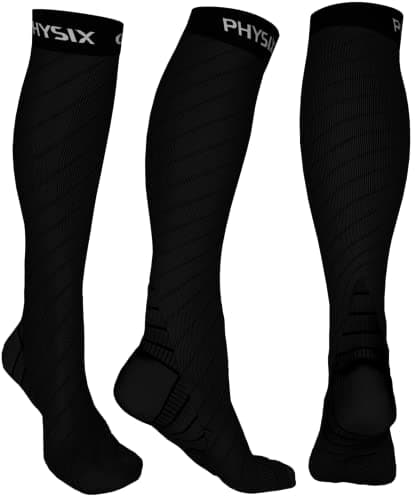
Physix Gear Compression Socks

The pair we would put in most nurses' lockers. A graduated 20-30 mmHg sock, two pairs per listing so one is always clean and dry, and cheap enough that replacing a tired pair is not a decision. Nothing here gives you more compression per dollar across a twelve-hour shift.

Best overall for shifts
8.2
$18.89Amazon
02
Comrad Comrad Knee High Compression Socks
Comrad Knee High Compression Socks

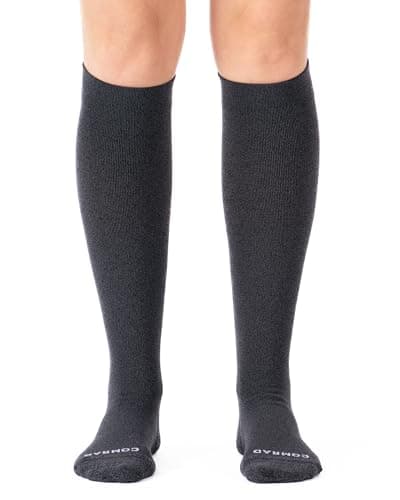
The best sock here for wearing all day in normal clothes, and the only one that publishes a calf-circumference range for each size. A lighter 15-20 mmHg class — a deliberate choice, not a shortfall — in a soft nylon knit that does not look like sports equipment.

Best for all-day comfort
8.0
$33.99Amazon
03
NEENCA NEENCA Professional Compression Socks
NEENCA Professional Compression Socks

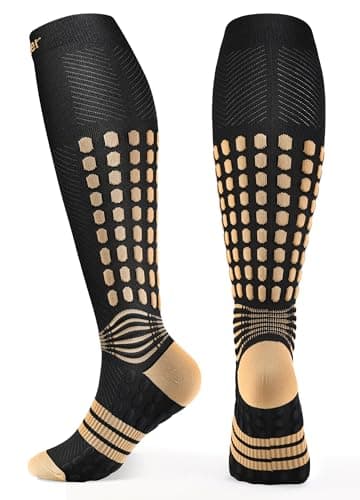
A published 20-30 mmHg sock with a reinforced ankle structure, aimed at swelling and all-day wear rather than sport. Good value and a sensible build. The copper-fiber claims on the listing are marketing, and we would ignore them entirely when deciding.

Best for swollen ankles and feet
7.8
$19.99Amazon
04
CEP CEP Core Run Tall Compression Socks 5.0
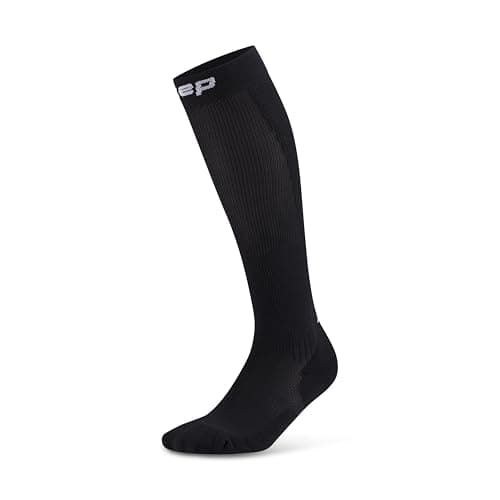
CEP Core Run Tall Compression Socks 5.0

The best-engineered sock here, and the only one that publishes where the compression is targeted - calf, ankle, Achilles and arch - rather than applying one uniform squeeze. If you work a shift and then train, this is the sock that does both jobs. It is also the most expensive pick on the page, at one pair per listing.

Best built, and best if you also run
8.4
$59.90Amazon
05
2XU 2XU Recovery Compression Socks
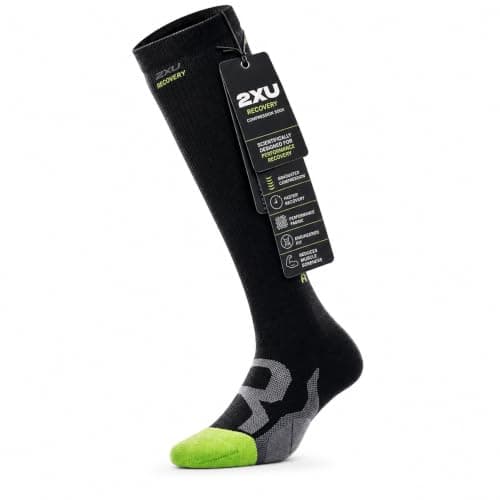
2XU Recovery Compression Socks

The one sock here built specifically for AFTER the session rather than during it — a thicker, plusher graduated knee-high aimed at reducing muscle oscillation and post-training soreness. Excellent at that job. 2XU does not publish an mmHg figure on this listing, which is the reason it is not higher.

Best for after the shift
7.4
$35.00Amazon
06
CEP CEP Core Run Compression Calf Sleeves 5.0
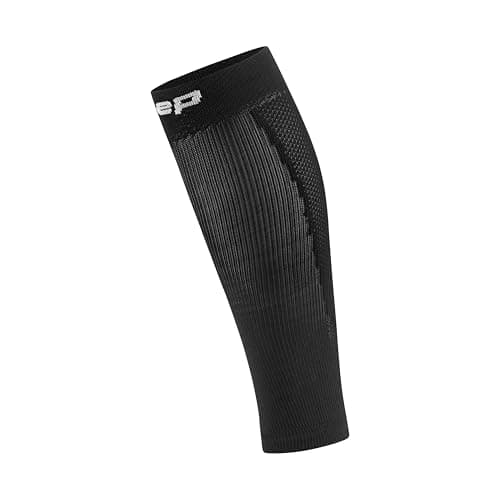
CEP Core Run Compression Calf Sleeves 5.0

Not a sock, and on this page that is the point. A published 20-30 mmHg sleeve that compresses the calf and leaves the foot free, so you keep your own running socks and your own shoe fit. The right answer for shin splints and calf tightness; the wrong one for swelling.

Best if the ache is calf-only
8.0
$44.90Amazon

#ad · Live prices from the Amazon Product API, as of November 7, 2026. Where we have no verified live price, we show none — a gap beats a number that has rotted.

In detail

The picks, in full

01
Physix Gear Sport Physix Gear Compression Socks

Best overall for shifts

Physix Gear Compression Socks

20-30 mmHg classGraduated profileTwo pairs per listingReinforced arch + heel
8.2/10

The pair we would put in most nurses' lockers. A graduated 20-30 mmHg sock, two pairs per listing so one is always clean and dry, and cheap enough that replacing a tired pair is not a decision. Nothing here gives you more compression per dollar across a twelve-hour shift.

Compression class
9
Fit & sizing
7
Durability
7
Comfort
8
Value
10

Pros

  • Two pairs in the box, which matters because you want a clean pair while the other dries
  • 20-30 mmHg is the class with the most support behind it for soreness and swelling
  • Reinforced arch and heel support, so it holds its shape over a long day on your feet
  • Cheap enough that replacing them when the elastic tires is not a real decision

Cons

  • Marketplace listing copy is keyword soup and this particular variant's title omits the mmHg figure — the brand publishes 20-30 mmHg on its sibling listings
  • Sizing runs by shoe size rather than calf circumference, which is the less reliable method
  • Plain black athletic look; nothing you would wear with a suit

Don't buy this if…

…you have a wide calf — this is the listing most likely to feel tight at the top band, and a sock that digs in at the knee is one you will stop wearing.

$18.89View on Amazon

$19.996% off

Price as of November 7, 2026. Prices change — Amazon's at checkout is the one that counts.

#ad · we may earn a commission from this link to Physix Gear Compression Socks

02
Comrad Comrad Knee High Compression Socks

Best for all-day comfort

Comrad Knee High Compression Socks

15-20 mmHg publishedSized by calf circumference91% nylon / 9% spandexOdor-control treatment
8.0/10

The best sock here for wearing all day in normal clothes, and the only one that publishes a calf-circumference range for each size. A lighter 15-20 mmHg class — a deliberate choice, not a shortfall — in a soft nylon knit that does not look like sports equipment.

Compression class
6
Fit & sizing
10
Durability
8
Comfort
10
Value
6

Pros

  • Publishes calf circumference per size (Medium fits a 12-14 inch calf) — the single most useful sizing spec on this page
  • 15-20 mmHg is the right class for desk days, flights and pregnancy, where 20-30 is often too much to wear for twelve hours
  • Soft, contoured nylon knit that genuinely passes as a normal sock under trousers
  • Easy to get on and off, which is why people actually wear them daily

Cons

  • 15-20 mmHg is lighter than the athletic class — this is not the pair for post-marathon legs
  • The most expensive sock here per pair after the CEP, for less compression
  • One pair per listing, in a specific color and size

Don't buy this if…

…you want athletic-grade compression for recovery after hard training. Buy the 20-30 mmHg picks for that and keep these for the working day.

$33.99View on Amazon

Price as of November 7, 2026. Prices change — Amazon's at checkout is the one that counts.

#ad · we may earn a commission from this link to Comrad Knee High Compression Socks

03
NEENCA NEENCA Professional Compression Socks

Best for swollen ankles and feet

NEENCA Professional Compression Socks

20-30 mmHg publishedReinforced ankle compression ringsCopper-infused nylon blendKnee-high, single pair
7.8/10

A published 20-30 mmHg sock with a reinforced ankle structure, aimed at swelling and all-day wear rather than sport. Good value and a sensible build. The copper-fiber claims on the listing are marketing, and we would ignore them entirely when deciding.

Compression class
9
Fit & sizing
7
Durability
7
Comfort
8
Value
8

Pros

  • States its compression class plainly at a budget price, which is the main thing we ask of a sock
  • Reinforced ankle and arch construction is the right place to put extra material for swelling
  • Breathable knit that handles a ten-hour shift without turning clammy
  • Widely available in standard sizes, so replacement is easy

Cons

  • The copper-ion and anti-inflammatory claims are not supported by evidence we would stand behind — the compression is doing the work, not the metal
  • The listing's 'Class 1 Medical Device' and 'doctors recommend' framing is the brand's own and should not be read as a clinical endorsement
  • One pair per listing at a price close to the two-pair winner

Don't buy this if…

…you are buying for the copper. Strip that claim away and you have a competent 20-30 mmHg sock, priced about where a competent 20-30 mmHg sock should be.

$19.99View on Amazon

Price as of November 7, 2026. Prices change — Amazon's at checkout is the one that counts.

#ad · we may earn a commission from this link to NEENCA Professional Compression Socks

04
CEP CEP Core Run Tall Compression Socks 5.0

Best built, and best if you also run

CEP Core Run Tall Compression Socks 5.0

20-30 mmHg publishedZoned calf / ankle / Achilles / archAir channels, quick-dryFlat toe seam + sole traction
8.4/10

The best-engineered sock here, and the only one that publishes where the compression is targeted - calf, ankle, Achilles and arch - rather than applying one uniform squeeze. If you work a shift and then train, this is the sock that does both jobs. It is also the most expensive pick on the page, at one pair per listing.

Compression class
10
Fit & sizing
9
Durability
9
Comfort
9
Value
5

Pros

  • CEP publishes the 20-30 mmHg figure and states where the compression is targeted, which almost no sock does
  • Breathable air channels and fast-drying yarn — the difference between a sock you race in and one you overheat in
  • Smooth toe seam and impact cushioning aimed squarely at blisters and long-run foot fatigue
  • Sized by leg measurement in numbered bands rather than by shoe size alone

Cons

  • The most expensive pick here, and one pair per listing — three or four times the cost of the winner
  • Sized and sold by gender and band (Men IV, Women III and so on), so the ASIN you land on is one specific size
  • The knee-high cut is hot in summer and visibly athletic; nobody wears these to the office

Don't buy this if…

…you want compression for standing all day rather than running. The cushioning, traction and tall athletic cut are paid-for features you will not use at a desk.

$59.90View on Amazon

Price as of November 7, 2026. Prices change — Amazon's at checkout is the one that counts.

#ad · we may earn a commission from this link to CEP Core Run Tall Compression Socks 5.0

05
2XU 2XU Recovery Compression Socks

Best for after the shift

2XU Recovery Compression Socks

Graduated knee-highRecovery-specific buildTargeted calf / shin / Achilles panelsmmHg not published on listing
7.4/10

The one sock here built specifically for AFTER the session rather than during it — a thicker, plusher graduated knee-high aimed at reducing muscle oscillation and post-training soreness. Excellent at that job. 2XU does not publish an mmHg figure on this listing, which is the reason it is not higher.

Compression class
6
Fit & sizing
8
Durability
8
Comfort
9
Value
6

Pros

  • Designed and sold as a recovery garment, not a running sock pressed into recovery duty
  • Thicker, plusher knit than the race socks here — comfortable to leave on for hours or overnight
  • Compression panels target the calf, shin and Achilles, the three areas that ache after hard running
  • Unisex sizing keeps the choice simple

Cons

  • No mmHg figure on the listing, so you cannot confirm the compression class before buying
  • Mid-price and one pair per listing — more than twice the winner for a sock you cannot verify numerically
  • Too thick to run in comfortably in warm weather

Don't buy this if…

…you want a number you can check. If a published compression class is what you are shopping for, the CEP or the Physix pairs state theirs and this one does not.

$35.00View on Amazon

Price as of November 7, 2026. Prices change — Amazon's at checkout is the one that counts.

#ad · we may earn a commission from this link to 2XU Recovery Compression Socks

06
CEP CEP Core Run Compression Calf Sleeves 5.0

Best if the ache is calf-only

CEP Core Run Compression Calf Sleeves 5.0

20-30 mmHg at the calfFoot left uncoveredAir channels, quick-drySized by calf band
8.0/10

Not a sock, and on this page that is the point. A published 20-30 mmHg sleeve that compresses the calf and leaves the foot free, so you keep your own running socks and your own shoe fit. The right answer for shin splints and calf tightness; the wrong one for swelling.

Compression class
9
Fit & sizing
8
Durability
9
Comfort
8
Value
6

Pros

  • Keeps your preferred running sock and shoe fit — no compromise on the part that causes blisters
  • Published 20-30 mmHg aimed at calf tightness, shin splints and muscle vibration
  • Washes and dries fast, and lasts longer than a sock because there is no heel or toe to wear through
  • Easy to pull on over a sore calf without fighting a foot section

Cons

  • No foot compression, so it does nothing for ankle or foot swelling — the most common reason people buy compression at all
  • Leaves a visible pressure line at the ankle on some legs
  • Costs nearly as much as the full CEP sock while covering less of the leg

Don't buy this if…

…your feet and ankles are what swell. A sleeve stops at the ankle, and the graduated gradient that fights swelling has to start below it.

$44.90View on Amazon

Price as of November 7, 2026. Prices change — Amazon's at checkout is the one that counts.

#ad · we may earn a commission from this link to CEP Core Run Compression Calf Sleeves 5.0

The mmHg number, and why 20-30 is not automatically the answer

Compression is sold in classes, measured in millimetres of mercury at the ankle. 15-20 mmHg is the mild class: easy to get on, comfortable to leave on all day, and the right starting point if you have never worn compression or if 20-30 has felt like a tourniquet. 20-30 mmHg is the class most of the published work on aching and swollen legs uses, and it is what most nurses who have settled on a sock end up wearing. Above that you are into prescription territory and should not be choosing from a list like this one.

The practical point: a sock that publishes its class is a sock whose maker expects to be held to it. Four of the six picks here state a figure. The 2XU does not, and that is the only reason it is not higher — it is a genuinely good recovery sock whose compression class you cannot verify before you buy.

Graduated versus uniform, in one sentence

Graduated means the sock is tightest at the ankle and eases as it goes up, which is the direction you want blood to travel. Uniform compression — common on cheap “sports socks” — squeezes evenly and can act like a band at the widest point of the calf. Every pick here is graduated. If a listing does not use the word, treat its silence as the answer.

The calf measurement nobody takes

Take a tape measure to the widest part of your calf, in the evening when it is at its largest, and buy to that number rather than to your shoe size. This is the single highest-value thing on this page. Shoe-size sizing is a proxy, and it is the reason so many reviews of so many socks say “cut into my leg” — the sock was not faulty, it was the wrong circumference. The Comrad and CEP listings publish calf ranges; the cheaper pairs size by shoe, which is a real reason to size up if you are between.

If your calves are genuinely large, a calf sleeve is the escape hatch worth knowing about: it compresses the calf and leaves the foot free, so you keep your own sock and your own shoe fit. The CEP sleeves at the bottom of this list do exactly that. They do nothing for a swollen ankle or foot, which is why they are last rather than excluded.

How many pairs you actually need

Three, if you work three or four shifts a week. Compression socks are a consumable — the elastic is what does the work and it tires with every wash. A pair worn and washed four times a week has a working life measured in months, not years, and a tired sock does not announce itself; it just stops holding. That is the real argument for the winner: at its price, buying three pairs and replacing them on a schedule costs less than one pair from a performance brand.

Wash them in a mesh bag, cool, and dry them flat. Heat is what kills elastic. And do not wear a sock whose top band leaves a deep groove in your leg — that is a fit problem, not a toughness problem.

If the ache is above the sock

A sock treats the leg it covers. If what hurts after a shift is your feet, a foot massager is the tool for it and a recovery shoe is the cheaper, duller answer that actually changes the hours you spend standing. If your whole lower leg is heavy and swollen most days and socks are not enough, sequential compression is the next step up — we rank that shelf in best compression boots for circulation, with the same warning about taking a medical question to a clinician.
How we picked

We did not lab-test this gear

Everyone in this category says they tested twenty products. We have not lab-tested any of these, and we say so. What we did instead: compiled the published specifications, pulled the numbers from the manufacturer manuals, ran the cost-to-run and cost-per-unit math where there was math to run, and scored each product against a published rubric. The scores are judgments from documented research — not measurements we took, because we do not have a lab and we will not pretend we do. Where a number came from someone else's work, we name them in Sources.

Questions

Frequently asked

What mmHg compression socks are best for nurses?
20-30 mmHg is the class most nurses settle on, and it is the class with the most published support for aching, swollen legs after long periods of standing. If you have never worn compression, or if 20-30 mmHg has felt unbearable by mid-shift, start at 15-20 mmHg instead — a sock you actually keep on beats a tighter one you take off at lunch.
How long can you wear compression socks in a shift?
A full shift is normal and is what graduated socks are designed for; take them off at the end of the day rather than sleeping in them unless a clinician told you otherwise. We go through the timing in detail in how long to wear compression socks.
Do compression socks help with swollen feet and ankles after work?
For ordinary end-of-shift swelling from standing, yes — that is the use graduated compression is best supported for. What matters is that the sock covers the swollen area: a calf sleeve will not help a swollen ankle or foot because it does not reach them. Swelling that is new, one-sided, painful or accompanied by redness is a reason to be seen, not a reason to buy a sock.
What are the best compression socks for nurses with large calves?
Measure the widest part of your calf in the evening and buy to a listing that publishes a calf range rather than only a shoe size — the Comrad and CEP picks here do. If nothing fits comfortably at the top band, a calf sleeve is the usual answer: it compresses the calf and leaves the foot alone, so the fit problem disappears.
How many pairs of compression socks should a nurse own?
Three is the practical number for three or four shifts a week, because the elastic is the working part and you want a dry pair ready. Wash cool in a mesh bag and dry flat; heat is what destroys compression. Treat them as a consumable and replace them when they go on easily — that is the sign they have stopped working, not the sign they have been broken in.
Are expensive compression socks worth it for nursing?
Usually not for standing work. The money on the premium pairs here buys running-specific features — zoned compression, sole traction, blister-conscious seams, fast-drying yarn — which are paid-for benefits you will not use on a ward. They are worth it if you work a shift and then train. Otherwise buy the cheaper published-class pair and buy three of them.

Keep reading

Receipts

Sources

We do not run a testing lab, and we do not pretend to. Where a measured number came from someone else's work, we name them and link them. Where we could not verify something, we say so on the page rather than quietly leaving it out. Read our full method.