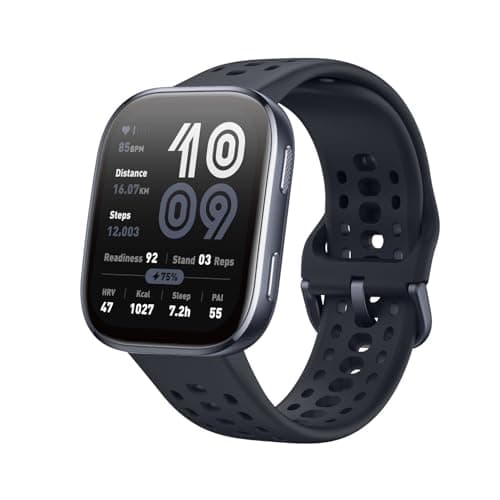
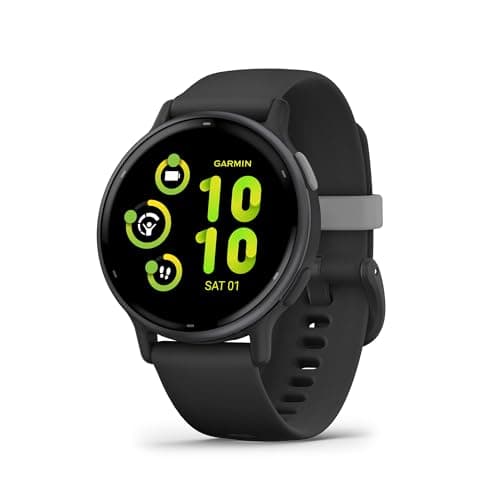
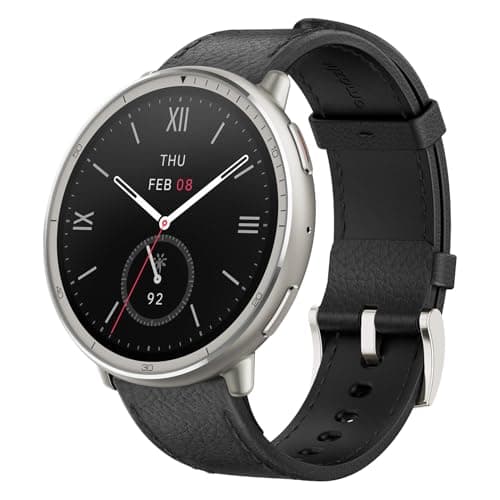
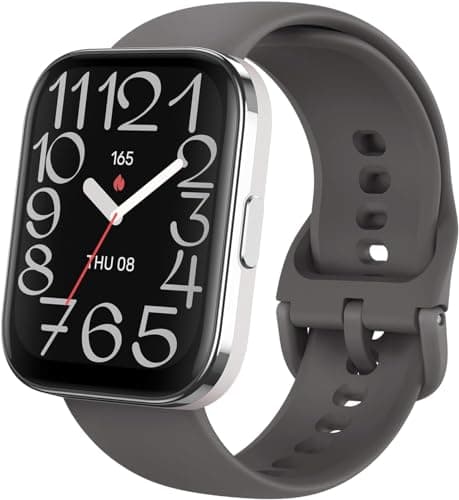
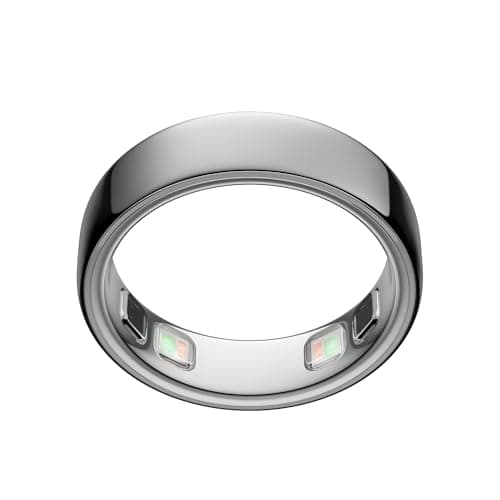
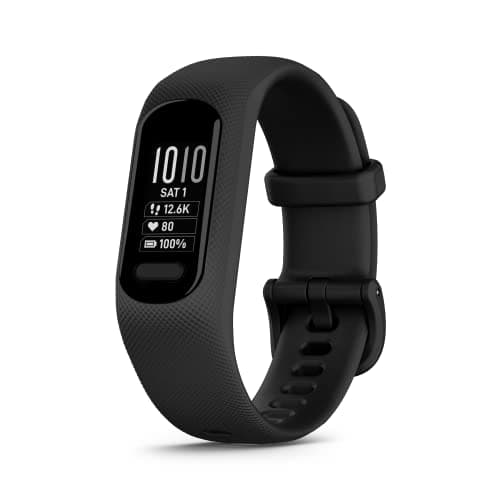
The Fitbit alternative to buy is the Garmin vívosmart 5. It is the only pick here that is the same kind of object: a slim band with a small screen that you forget you are wearing, with a readiness score and overnight HRV and no membership attached. If price is the reason you are leaving, the Amazfit Bip 6 gives you built-in GPS and up to fourteen days of battery for considerably less than a Charge 6, in a watch shape rather than a band. If you want more data and a proper screen, the Garmin vívoactive 5 is the upgrade. The budget pick is the Amazfit Bip 5, and the Oura Ring 5 is here as the deliberate opposite answer for anyone who wants to stop wearing something on their wrist entirely.
First, what Fitbit is known for— because an alternatives page that will not say what the original does well is not worth reading. Fitbit built the category. The Charge 6, its flagship band, publishes up to seven days of battery on Google's own spec sheet, carries built-in GPS and GLONASS (so it maps a run without your phone), and includes an ECG appthat assesses heart rhythm for atrial fibrillation, along with irregular heart rhythm notifications — both available in select countries only, per Google. And it does all that in a slim band, with the most approachable app in the business and the longest-running community in consumer fitness tracking. None of the picks below replaces all of that.
Two facts about Fitbit today are also worth stating plainly, because they are the reason most people arrive at this page.Google's own product page states that the device requires a Google Account and internet access, and its help documentation notes that some features require the Google Health mobile app and/or a paid subscription. Neither of those is a flaw in the hardware. They are structural decisions about how you own the thing, and for a lot of readers they are exactly what is being left behind.
Which brings us to the ranking axis, and it is not the one you would expect. The hard part of leaving Fitbit is not matching the features — that turns out to be easy and often cheaper. The hard part is the shape. A Charge is a narrow strap with a sliver of screen; it disappears under a shirt cuff and it is comfortable to sleep in, which is the whole reason the overnight data exists at all. Walk the shelf for a replacement and almost everything you find is a watch: a round or square case, visibly a device, heavier on a pillow. One product on this page is a band. The rest are a different object, and we are going to say so on each card rather than pretend the specification is the only thing that changed.
Ranked below on form-factor fidelity first, then on what you keep without paying a subscription, then on sleep tracking, battery and price. Every pick is a device we already rank elsewhere on this site, with the same specs and the same scores — what changes here is the question being asked of them. If a recurring fee rather than the shape is your real objection, the fuller treatment is in best no-subscription trackers; if you want the two brands set directly against each other instead of a ranked list, see Fitbit vs Garmin.
What you actually lose by leaving
Three things, and only three. Everything else on a Fitbit has a free equivalent somewhere on this page.
1. The ECG app and irregular-rhythm notifications.The Charge 6 carries an ECG app that assesses heart rhythm for atrial fibrillation, plus irregular heart rhythm notifications — both, per Google's spec sheet, in select countries only. No pick on this page has either. If that capability is why you own a Fitbit, leaving is a downgrade and you should read best health monitoring wearables instead, which ranks devices purely on which features carry a named clearance.
2. The app.This is the loss people underestimate. Fitbit's app is the most approachable in the category and it has fifteen years of refinement behind it. Garmin's Connect is denser and takes a week to get used to; Amazfit's Zepp is simpler but thinner, and its third-party support trails everyone. Expect a fortnight of mild irritation regardless of which pick you choose.
3. On one pick, the band shape.Five of the six alternatives here are watches. Only the vívosmart 5 is a band. If you have worn a Charge for years, that is the single biggest day-to-day change on the list, and it is the reason the ranking is ordered the way it is.
What you do not lose
Built-in GPS.The Charge 6 has GPS and GLONASS on board. So do four of the six picks here — including the cheapest. Only the vívosmart 5 borrows your phone's.
Sleep tracking and overnight HRV. Every pick does both. The ring does it better than any Fitbit band; the Garmins turn it into a readiness verdict (Body Battery) without charging for the privilege.
Battery. Fitbit publishes up to seven days for the Charge 6 and notes that an always-on display and SpO2 shorten it. Four picks here beat that figure; two roughly double it. This is not a sacrifice, it is an upgrade.
Water resistance, on most of them.The vívosmart 5, Bip 6 and Active 2 are 5 ATM and the ring is rated to 100 m. The exception is the budget Bip 5, which is IP68 — splashes, not swimming. Check that one specifically if you swim.
The subscription question, stated carefully
Google's help documentation says some Fitbit features require the Google Health mobile app and/or a paid subscription, and Google's product page says the device requires a Google Account and internet access. Those are the published facts, they are the ones worth deciding on, and we are not going to extend them into claims about which specific metric sits behind which tier — that changes, and a page that guesses at it is worse than a page that does not.
What is useful is the comparison. Four of the six picks here charge nothing after the box, ever, at any tier: both Garmins and both Amazfits give you sleep, HRV, stress and (on the Garmins) a readiness score with no membership to decide about in six months. One pick, the Oura ring, charges monthly for its best insights and we have ranked it last partly for that reason. If the fee structure is your whole objection rather than the shape, the page built around that exact question is best no-subscription trackers, and the five-year arithmetic across the cheap end of the shelf is in best budget fitness trackers.
Which one, by what pushed you out
You liked the band and want it back.Vívosmart 5. It is the only band here, it costs about what a Charge does, and nothing is paywalled. Accept the loss of built-in GPS.
You thought it was too expensive for what it gave you. Bip 6. Less money than a Charge, built-in GPS, roughly double the battery, nothing behind a fee.
You want more data and do not mind a watch.Vívoactive 5. The best recovery analysis per dollar on this page.
You only ever looked at the sleep screen.Oura Ring 5 — better sleep than any Fitbit band, and a monthly fee. Or a ring with no fee from Oura Ring alternatives.
You want the cheapest thing that still counts steps and sleep. Bip 5, and mind the IP68 rating if you swim.
You wore it for the ECG. Stay, or spend more. Nothing here replaces it, and we would rather say that than sell you a watch.