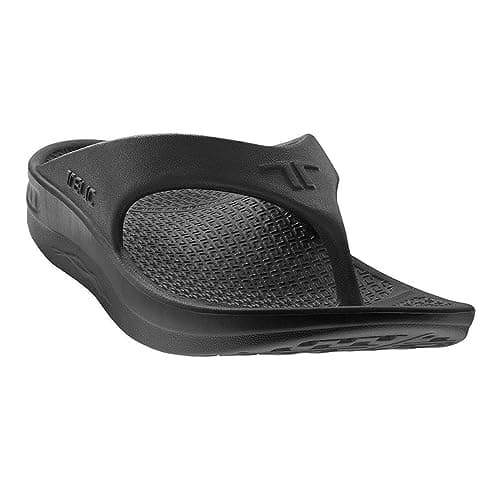
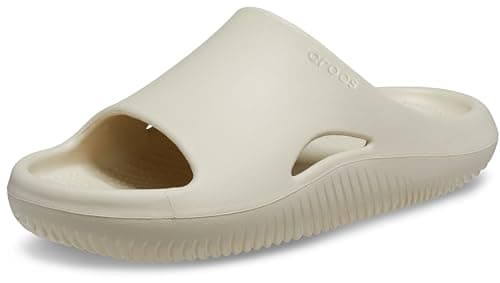
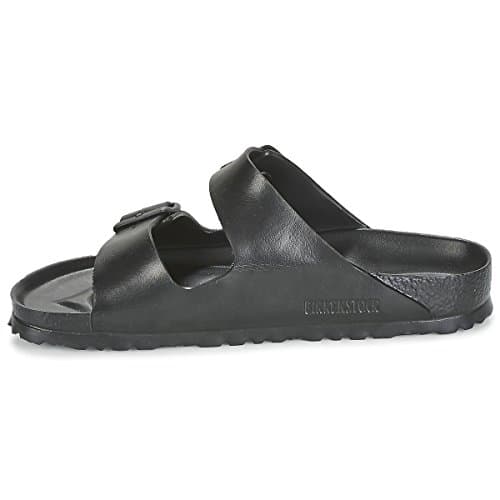
The OOFOS alternative to buy is the Birkenstock Arizona Essentials EVA. It is the most structured footbed here by a distance and it fixes the two things people genuinely complain about on an OOahh — whole sizes only and a strap that does not adjust. If you want the OOFOS feel rather than the OOFOS shape, the Telic Energy Flip Flop is the closest soft-and-contoured match, and the budget pick is the Crocs Mellow Recovery Slide, the cheapest slide we could verify that is built around a genuine cupped recovery footbed rather than just soft foam.
Start with what OOFOS actually gives you, because an honest alternatives list has to name it. The OOahh is a single piece of molded OOfoam, roughly a 20 mm platform at 9.9 oz a pair, with a patented cupped-heel footbed and the arch shaped into the sole rather than glued on top. OOFOS publishes the one number nobody else in this category will: it states OOfoam absorbs 37% more impact than traditional footwear foam. It carries the APMA Seal of Acceptance, meaning a panel of podiatrists reviewed it for foot health, and the closed-cell foam goes through a washing machine. That is a genuinely well-engineered object and the reason it is the reference product in the category.
Here is the thing that decides this page, though. No alternative publishes an impact-absorption figure at all— not Birkenstock, not Crocs, not Nike, not Telic. So “is it as cushioned as an OOFOS?” is a question none of them lets you answer on paper, and anybody claiming otherwise is guessing. What you can compare is the part that does most of the useful work: the geometry. A recovery sandal earns its name through a deep heel cup that stops the heel bone splaying sideways and a molded arch that carries load the fascia would otherwise carry. Soft and flat is not recovery footwear, however pleasant it feels in a shop.
So the ranking below goes: footbed shape first, then fit coverage(half sizes, widths, adjustable straps — the OOahh is weak here and two picks are much stronger), then care and durability, then price. Softness is a tiebreaker, not a criterion. One pick is ranked last and told plainly to skip for foot pain, because it is a nice slide and the wrong shape.
If what you actually want is the whole shelf ranked rather than the brand framing, that is best recovery shoes, where the OOahh wins. And if the reason you are shopping is heel pain in the morning rather than tired feet at night, read massage gun for plantar fasciitis before you buy any footwear — the sandal unloads the tissue, it does not change it.
What an alternative gives up
The published number.OOFOS states that OOfoam absorbs 37% more impact than traditional footwear foam. It is the company's own claim rather than independent testing, and we say so on the parent page — but it is still the only figure in the category, and no alternative here offers one to compare it with. If you want a documented impact claim, there is exactly one brand selling you that.
The APMA Seal of Acceptance.A panel of podiatrists reviewed the OOahh for foot health. None of the four picks here lists that seal. APMA is explicit that it is not a testing laboratory, so the seal is a review rather than a lab result — but it is a review the alternatives have not been through.
A closed shoe you can walk in.This is the gap people hit hardest. OOFOS makes the OOmy Stride, a laced recovery shoe on the same foam with a support cradle and half sizes from 5 to 15, for the reader who needs cushioning during the day rather than after it. None of the four alternatives here does that. If covering real distance is the point, the honest answer is that the alternative to an OOFOS slide is a different OOFOS — we rank it on best recovery shoes.
And what they give back: fit. The OOahh is whole sizes only, with no width options and a fixed strap, which for a wide forefoot or a high instep is not a preference problem but a fitting problem. The Birkenstock has two widths, a US 4 to 16.5 range and two adjustable buckles. That is the single most useful upgrade available by leaving.
Why we rank footbed shape over softness
A recovery sandal does two things: it blunts the floor, and it holds the foot. Blunting the floor is a foam property. Holding the foot is a geometryproperty — a deep heel cup that stops the calcaneus rolling and splaying, and a molded arch that takes some of the load the plantar fascia would otherwise take.
The second one matters more, for a blunt reason: foam is the part you cannot verify and shape is the part you can. Every brand on this page describes its foam in marketing language — soft yet supportive, sink-in, body-heat-activated — and only one attaches a number to it. But every brand photographs its footbed, and a deep cupped heel is visible from across a room. Grade what you can see.
It also explains the ranking order, which is deliberately not a softness order. The firmest pick on this page is first and the softest-feeling plain slide is last, because a soft flat platform under a tired foot lets the arch keep collapsing and gives you nothing to push against. Clinical guidance for plantar fasciitis says the same thing in plainer words: sturdy, well-cushioned shoes with built-in arch support, not flat sandals.
Sizing: the thing that actually decides whether you keep them
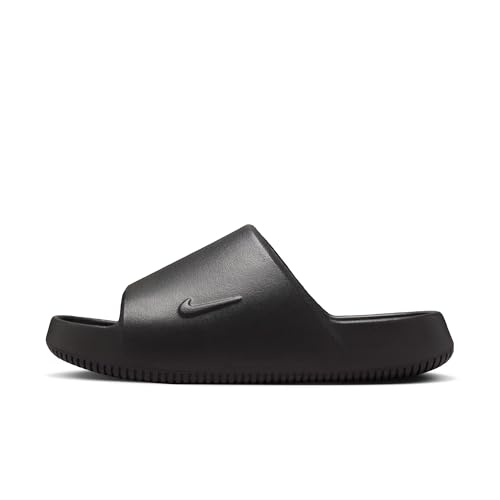
Recovery sandals are returned for fit far more often than for performance, and each pick here fails differently. The Crocs Mellow runs roomy and Crocs itself recommends sizing down, which is a bad starting point if your feet are already sore. The Birkenstock is EU-numbered with US conversions, which trips up a lot of first-time buyers — but it is also the only pick with a narrow width, so if you have been swimming in unisex slides it is the one worth the paperwork. The Telic has a toe post, which is a yes-or-no question about your own feet rather than a sizing issue. The Nike is sold in separate men's and women's numeric sizing, which makes it the most predictable of the four.
One shared rule: measure at the end of the day. Feet are measurably bigger after hours on them, and a recovery sandal is specifically a thing you put on at the end of the day.
What a sandal will not do
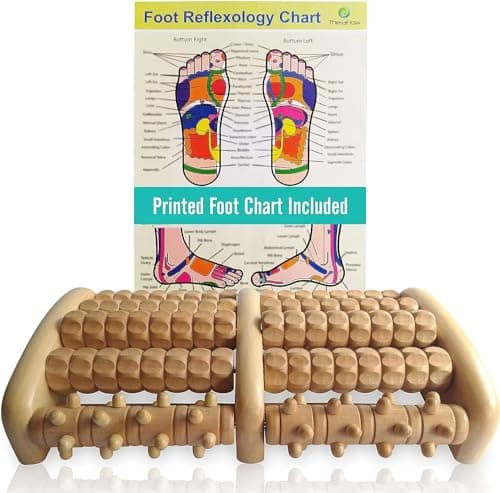
A recovery sandal changes the loadon your foot. It does not change the tissue. Coming off a long shift or a long run, the difference between a contoured footbed and a flat flip-flop is immediate and worth the money. Expecting it to resolve morning heel pain on its own is a different proposition — for that, the cheap, boring, effective thing is rolling the arch and the calf, which is why we put a twenty-dollar wooden roller in the add-ons below and rank it first on best foot massagers.
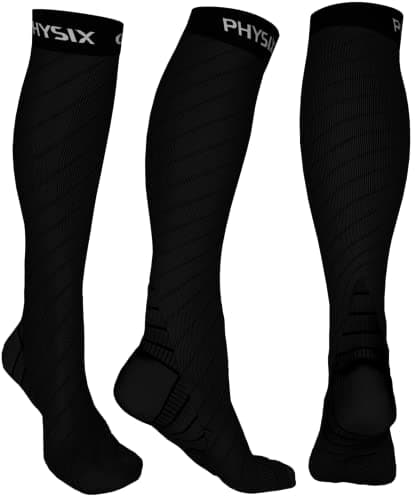
And if the complaint is heavy, aching legs after standing rather than sore feet, footwear is the wrong category entirely. Graduated compression during the shift does more than anything you put on afterwards — see best compression socks. For where a recovery sandal sits in the buy order against everything else in this hub, we lay that out in recovery gear starter kit.