Hypervolt alternatives — ranked on quiet, not on power
Nobody buys a Hypervolt for stall force. They buy it because it is quiet and smooth and feels like nothing. Six alternatives ranked on published noise figures, stroke smoothness and one-handed form.
We earn a commission when you buy through our Amazon links, at no extra cost to you. It never changes a verdict, and we say so when the cheaper product is the better buy. How this works.
The best Hypervolt alternative is the Ekrin Athletics B37v2.It is the one gun here that is quiet in the Hypervolt sense — Ekrin rates it in a roughly 35–55 dB band — while publishing the two numbers Hyperice does not: 12 mm of amplitude and 56 lb of stall force, with a lifetime warranty behind it. It is the right buy for someone who liked how a Hypervolt felt but wanted it to actually push into muscle. If you are replacing a Hypervolt Go specifically — the small travel one — the Ekrin Bantam is the closer match at 1.1 lb. The budget pick is the Toloco EM26 — the cheapest gun here that does the job, with the honest caveat that it is the loudest thing on this page.
Start with what a Hypervolt actually is, because the alternatives people get recommended usually miss it. Hyperice sells the Hypervolt on QuietGlide: the Go 3 is rated around 55 dB at 1.6 lb with five speeds and TSA-friendly dimensions, and the full Hypervolt 2 is a 60 W, three-speed, roughly 1.8 lb cylinder with a built-in pressure sensor and five attachments. Notice what is missing from both spec sheets: Hyperice does not publish an amplitude or a stall-force figure for the standard Hypervolt 2. That is not an oversight — depth is not what it is selling. It is selling a gun that is quiet enough to use next to someone watching television, smooth enough not to rattle your teeth, and shaped like a torch so you can work your own shoulder one-handed.
So this page is ranked on published noise first, one-handed cylinder form second, and smoothness of stroke third — then, and only then, on force. Three of the six picks publish a decibel band; where a manufacturer does not publish one, we say so instead of inventing a number. That is also why the Theragun Relief appears here even though it is a triangle rather than a cylinder: for a reader whose actual complaint is “my Hypervolt cannot reach my own upper back”, the handle geometry is the fix.
Two things worth knowing before you choose. First, no gun here reproduces the pressure sensor — it is genuinely a Hyperice feature, and if you used it, you will miss it. Second, if what you are really replacing is a Hyperice Normatec rather than a Hypervolt, that is a different shelf entirely and we rank it in Normatec alternatives. If you want the Theragun-shaped comparison instead, we run it in Theragun vs Hypervolt.
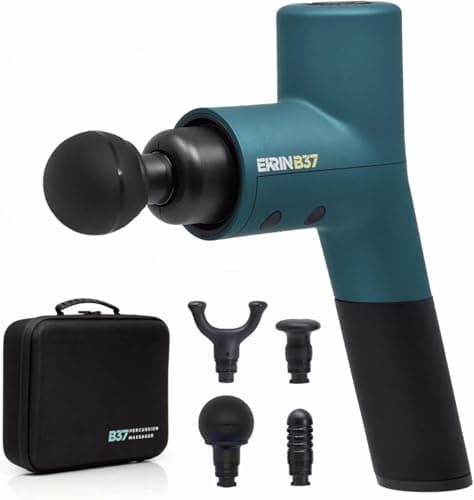
The alternative for someone who liked the Hypervolt's manners but wanted it to bite. Quiet for its class at a rated 35-55 dB, with the two figures Hyperice declines to publish - 12 mm amplitude and 56 lb of stall force - up to 8 hours of battery, and a lifetime warranty.
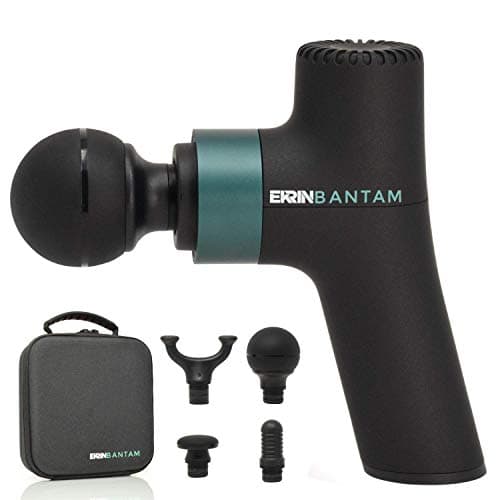
The Hypervolt Go replacement. 1.1 lb against the Go 3's 1.6 lb, a rated 35 lb of stall force where the Go publishes none, four to six hours of battery against about four, and the same lifetime warranty as its bigger sibling. Three speeds, like the Hypervolt 2.
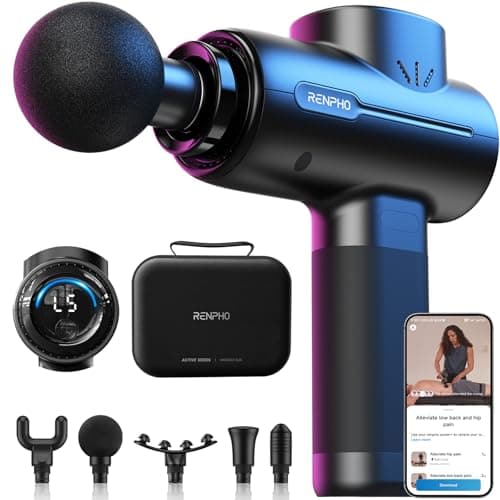
The quietest published figure on this page, and the cheapest way to keep the thing a Hypervolt is bought for. Renpho rates it at 45 dB or under with a 50 lb stall force at about 1.5 lb, and it carries the Bluetooth app a Hypervolt owner is used to. The 10 mm stroke is the trade.
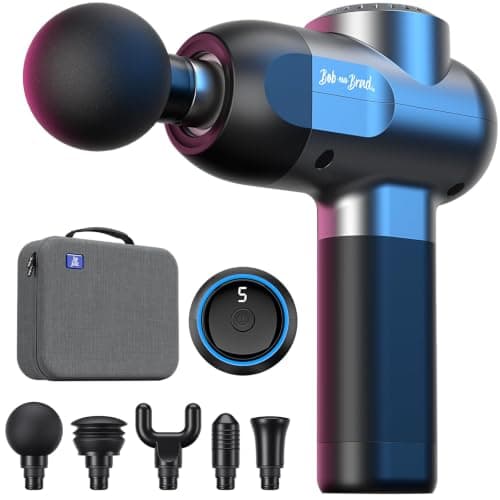
The value answer. Five speeds, five heads, about 1.5 lb, quiet at the speeds people actually use, and FSA/HSA eligible - for a fraction of a Hypervolt. The brand does not publish amplitude or stall force, which is exactly the gap Hyperice leaves too, so judge it on form and price rather than on numbers nobody prints.
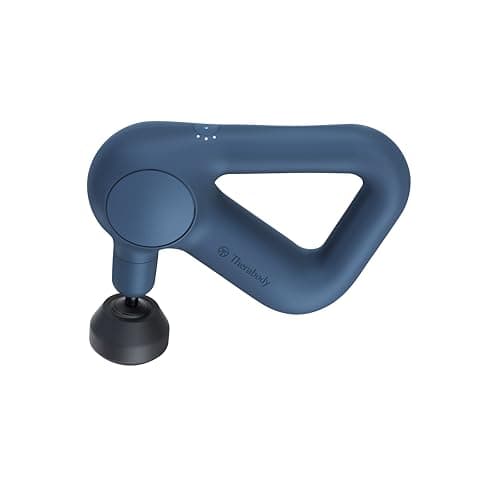
The pick for the one complaint a quieter cylinder cannot fix: not being able to reach your own upper back. Therabody's triangle handle solves that geometrically, and the Relief is deliberately the gentle one in the range at three speeds and about 1.4 lb - closer to a Hypervolt in feel than any other Theragun.
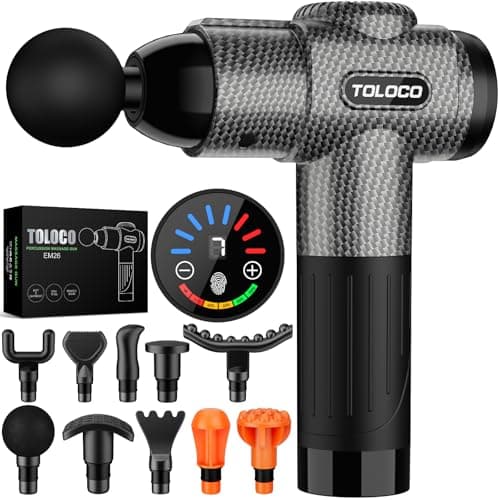
The cheapest gun here that does the job, and the honest last place. Seven speed levels, ten heads, an LCD and about six hours of battery for a tiny fraction of a Hypervolt - but it is the loudest thing on this page, and noise is the whole reason you owned a Hypervolt.
#ad · Live prices from the Amazon Product API, as of November 24, 2026. Where we have no verified live price, we show none — a gap beats a number that has rotted.
The alternative for someone who liked the Hypervolt's manners but wanted it to bite. Quiet for its class at a rated 35-55 dB, with the two figures Hyperice declines to publish - 12 mm amplitude and 56 lb of stall force - up to 8 hours of battery, and a lifetime warranty.
Published quiet
9
One-handed form
8
Stroke smoothness
8
Force
9
Value
8
Pros
+Publishes both amplitude and stall force, which the standard Hypervolt 2 does not
+Rated roughly 35-55 dB — quiet in the same sense a Hypervolt is quiet
+Up to 8 hours of battery with USB-C, against about 3 hours on the Hypervolt 2
+Lifetime warranty, which no Hyperice gun offers
+Angled handle reaches more of your own back than a straight cylinder
Cons
−About 2.1 lb — heavier in the hand than either Hypervolt
−Four attachments, one fewer than the Hypervolt 2 bundles
−No pressure sensor, and no app
Don't buy this if…
…you want the lightest possible gun for a bag — at 2.1 lb this is a bench gun, and the Bantam is the travel answer.
The Hypervolt Go replacement. 1.1 lb against the Go 3's 1.6 lb, a rated 35 lb of stall force where the Go publishes none, four to six hours of battery against about four, and the same lifetime warranty as its bigger sibling. Three speeds, like the Hypervolt 2.
Published quiet
8
One-handed form
9
Stroke smoothness
8
Force
7
Value
7
Pros
+Lighter than the Hypervolt Go 3 and still rated for 35 lb of stall force
+Roughly 4 to 6 hours of battery — longer than the Go 3's ~4 hours
+Angled handle rather than a straight stick, so it reaches your own traps
+Lifetime warranty on a mini, which is close to unheard of
Cons
−Costs several times what the budget minis cost
−Three speeds and a short mini stroke — a travel gun, not a release tool
−Hyperice does not publish a noise figure for the Go that we can rank this against directly
Don't buy this if…
…you want one gun for everything — a mini is a supplement to a full-size gun, not a replacement for one.
10mm amplitude50 lb stall force45 dB or underFSA/HSA eligible
8.4/10
The quietest published figure on this page, and the cheapest way to keep the thing a Hypervolt is bought for. Renpho rates it at 45 dB or under with a 50 lb stall force at about 1.5 lb, and it carries the Bluetooth app a Hypervolt owner is used to. The 10 mm stroke is the trade.
Published quiet
10
One-handed form
8
Stroke smoothness
8
Force
7
Value
9
Pros
+Rated 45 dB or under — the lowest published noise ceiling in our massage gun hub
+A published 50 lb stall force, so it does not bog down when you lean on it
+About 1.5 lb, almost exactly a Hypervolt 2's weight class
+Bluetooth app with guided routines, like the Hyperice app a switcher is leaving
+FSA/HSA eligible
Cons
−10 mm amplitude does not reach as deep as the 12 mm guns
−Around 3.5 hours of battery is middling
−No pressure sensor
Don't buy this if…
…you wanted the upgrade in depth as well as the saving — the B37v2's 12 mm stroke is the one that changes how it feels.
The value answer. Five speeds, five heads, about 1.5 lb, quiet at the speeds people actually use, and FSA/HSA eligible - for a fraction of a Hypervolt. The brand does not publish amplitude or stall force, which is exactly the gap Hyperice leaves too, so judge it on form and price rather than on numbers nobody prints.
Published quiet
7
One-handed form
8
Stroke smoothness
7
Force
7
Value
10
Pros
+Five speeds against the Hypervolt 2's three, at a small fraction of the price
+Light at about 1.5 lb and comfortable to hold overhead
+Five attachments, matching the Hypervolt 2's bundle
+FSA/HSA eligible, and a brand with a real support record behind it
Cons
−No published amplitude or stall-force figure
−Mid-range force — dense muscle on a big frame is a stretch
−No pressure sensor and no app
Don't buy this if…
…you need published numbers to compare against your old gun — Renpho and Ekrin print theirs, and this brand does not.
The pick for the one complaint a quieter cylinder cannot fix: not being able to reach your own upper back. Therabody's triangle handle solves that geometrically, and the Relief is deliberately the gentle one in the range at three speeds and about 1.4 lb - closer to a Hypervolt in feel than any other Theragun.
Published quiet
8
One-handed form
9
Stroke smoothness
8
Force
6
Value
7
Pros
+The triangle handle reaches between your own shoulder blades, which no cylinder does
+Quiet and light at about 1.4 lb — the least intimidating Theragun
+A gentle stroke tuned for everyday stiffness, like the Hypervolt's
+Therabody's support and attachment ecosystem behind it
Cons
−Three speeds and a gentle stroke — light on power for deep work
−Costs more than harder-hitting guns here
−The triangle is bulkier in a bag than any cylinder
Don't buy this if…
…you want serious deep-tissue force — the Relief is the comfort model, and the B37v2 out-specifies it for less.
The cheapest gun here that does the job, and the honest last place. Seven speed levels, ten heads, an LCD and about six hours of battery for a tiny fraction of a Hypervolt - but it is the loudest thing on this page, and noise is the whole reason you owned a Hypervolt.
Published quiet
4
One-handed form
7
Stroke smoothness
5
Force
6
Value
10
Pros
+By far the cheapest route back to owning a working gun
+About six hours of battery, longer than either Hypervolt
+Seven speed levels and ten heads, so you can dial your own tolerance
+Perfectly good for everyday calves, quads and glutes
Cons
−Louder than everything else here — the opposite of the Hypervolt's selling point
−Independent testers measure a shorter stroke than the box claims
−Ten heads is mostly marketing; you will use two
−No app, no pressure sensor, no published noise figure
Don't buy this if…
…quiet is why you bought a Hypervolt in the first place — spend up to the Renpho instead, which publishes 45 dB or under.
Three features define a Hypervolt, and they are worth separating because only two of them are replaceable. Quiet is replaceable, and cheaply — Renpho publishes a lower ceiling than Hyperice does. Cylinder form is replaceable; most guns on this page are the same shape. The pressure sensor is not: no other gun here reads how hard you are pressing and shows it to you. If that feature changed how you used the gun, the honest advice is to stay with Hyperice or accept you are losing it.
Why noise is a real spec and not a vibe
A massage gun that annoys the room is a massage gun that lives in a drawer, and that is the single commonest reason cheap guns get abandoned. The complication is that decibel claims are not measured the same way by any two brands— nobody publishes the distance, the speed setting or the attachment they measured with. So treat a published figure as a statement of intent rather than a measurement: a brand that commits to “45 dB or under” has designed for quiet, and a brand that publishes nothing has not made the claim. We rank on whether the figure is published and what it says, because that is the only honest way to use it — and we have not measured any of these ourselves.
Amplitude, stall force, and the number Hyperice does not print
Amplitude (stroke length) is how far the head travels — roughly 10 mm is everyday, 12 mm pushes into muscle, 16 mm is the Theragun Prime class. Stall force is how hard you can lean before the motor gives up. Hyperice publishes neither for the standard Hypervolt 2, which is its own answer about what the gun is for. If you are switching because you felt the Hypervolt was not doing anything, those two numbers are the ones to shop on, and the B37v2 is the pick on this page that prints both.
What a gun will not fix, at any price
Percussion is symptom management with decent evidence for short-term soreness and range of motion, and no evidence that it rebuilds anything. If your calves are tight every single morning, the gun is treating a loading problem; look at the evidence summary before you spend again. And keep it off the front and sides of the neck, the spine and any joint — the full list is in where not to use a massage gun.
How we picked
We did not lab-test this gear
Everyone in this category says they tested twenty products. We have not lab-tested any of these, and we say so. What we did instead: compiled the published specifications, pulled the numbers from the manufacturer manuals, ran the cost-to-run and cost-per-unit math where there was math to run, and scored each product against a published rubric. The scores are judgments from documented research — not measurements we took, because we do not have a lab and we will not pretend we do. Where a number came from someone else's work, we name them in Sources.
Questions
Frequently asked
What is the best Hypervolt alternative?+
The Ekrin Athletics B37v2. It keeps what a Hypervolt is bought for - a quiet, smooth, one-handed cylinder, rated at roughly 35-55 dB - and adds the two specs Hyperice does not publish for the standard Hypervolt 2: 12 mm of amplitude and 56 lb of stall force. It also runs up to 8 hours per charge against the Hypervolt 2's roughly 3, and carries a lifetime warranty.
Is there a cheap alternative to the Hypervolt?+
Yes, and the quiet one is the Renpho Active+, which publishes a 45 dB or under noise ceiling and a 50 lb stall force at about 1.5 lb - the same weight class as a Hypervolt 2 - with a Bluetooth app. If you want the cheapest working gun rather than the cheapest quiet gun, the Toloco EM26 does the job for less, but it is noticeably louder, and noise is the Hypervolt's whole selling point.
What is a good alternative to the Hypervolt Go?+
The Ekrin Bantam. The Go 3 is a 1.6 lb, five-speed travel gun rated around 55 dB; the Bantam is 1.1 lb with a published 35 lb stall force, four to six hours of battery and a lifetime warranty. You lose the Hyperice app and the TSA-friendly branding, and you gain weight savings, a rated force figure and a warranty no Hyperice gun matches.
Do any other massage guns have a pressure sensor?+
Not among the guns we rate. The pressure sensor that reads how hard you are pressing is a genuine Hyperice feature, and none of the alternatives on this page reproduce it. If it is the feature you used most, the honest answer is that switching costs you something real - buy a Hypervolt, or accept that you will be judging pressure by feel.
Is the Hypervolt worth the extra money over a cheap gun?+
It is if quiet and smoothness are the features you care about and you will use the app. It is not if you are buying it for depth: Hyperice does not publish an amplitude or stall-force figure for the standard Hypervolt 2, and guns at a third of the price publish 10-12 mm strokes and 50-56 lb stall forces. Decide which of the two things you are buying before you compare prices.
Hypervolt vs Theragun - which should I replace mine with?+
They are different machines, not better and worse. A Hypervolt is a quiet cylinder with a short, smooth stroke; a Theragun is a triangle-handled gun with a long, harder stroke that reaches your own back. If your complaint about the Hypervolt was that it was too gentle, a Theragun is the switch. If it was that you could not reach between your shoulder blades, the Theragun Relief fixes the geometry while staying gentle. We run the full comparison on the Theragun vs Hypervolt page.
We do not run a testing lab, and we do not pretend to. Where a measured number came from someone else's work, we name them and link them. Where we could not verify something, we say so on the page rather than quietly leaving it out. Read our full method.