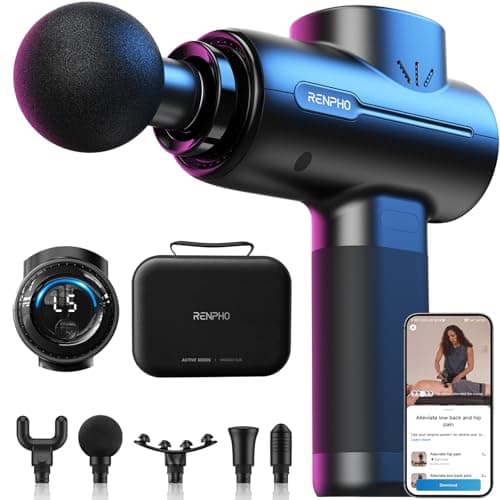
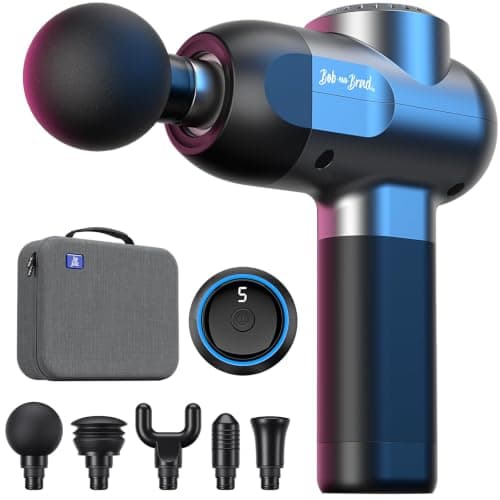
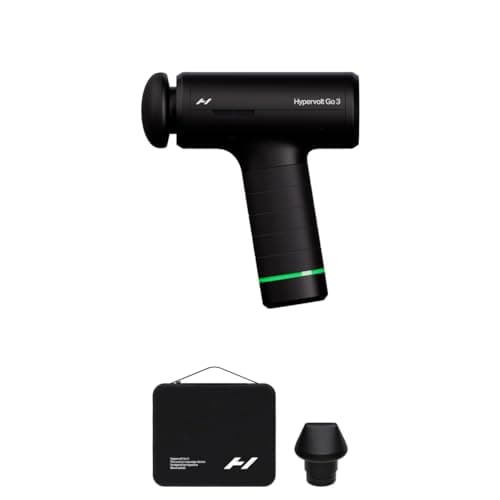
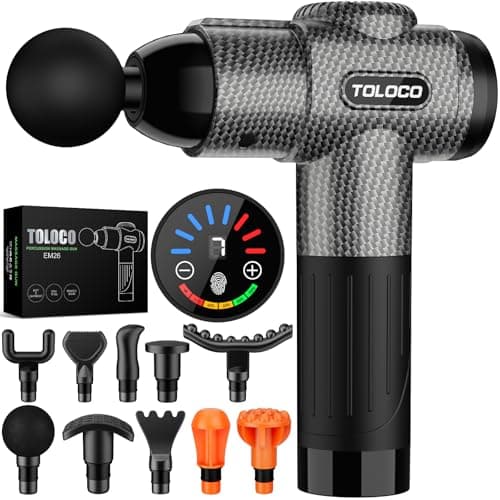
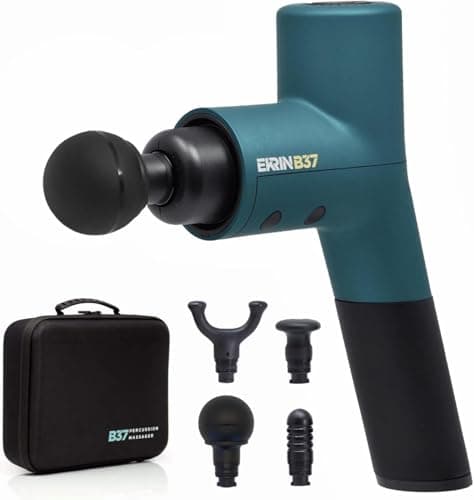
People search for a Theragun alternative for one of two reasons: the price, or the noise. Both are fair. Therabody's flagships are the reference point for deep percussion — the 16 mm stroke on a Prime or Pro is genuinely deeper than most guns manage — and the triangle handle is the best self-treatment design anyone has shipped. You are also paying a substantial brand premium for both.
The honest version of this list starts by naming what you actually give up: the deepest stroke in the category, the triangle grip, the app ecosystem, and a support operation that answers the phone. What you do not give up, if you choose carefully, is real amplitude, real stall force, quiet operation, or a long warranty — several of the guns below match or beat Therabody on at least one of those, and one of them beats it on warranty outright.
Ranked below on how closely each one delivers the Theragun experience for less. If you want the head-to-head against the other big brand instead, we cover that in Theragun vs Hypervolt; if price is the only thing that matters, the best budget massage guns go lower still.
What you actually give up by not buying a Theragun
Four things, and it is worth being precise about them. Stroke depth: the Prime and Pro run a 16 mm amplitude, and nothing on this list matches it — 12 mm is the practical ceiling for the alternatives. The handle: the triangle grip is a genuinely better design for treating your own back and shoulders, and it is patented-looking enough that rivals go with an angled handle instead. The ecosystem: app-guided routines, a wide attachment range and a support operation with a phone number. Resale and reputation: a used Theragun sells; a used generic does not.
What you do notgive up: quiet operation (the Renpho is rated near 45 dB, which is quieter than most premium guns), stall force (the Ekrin's 56 lb rating is high for any gun at any price), battery life (8 hours beats every flagship), or warranty (a lifetime warranty beats Therabody outright).
The one spec that decides whether an alternative feels cheap
Stall force, not amplitude, is what makes a cheap gun feel cheap. Amplitude determines how deep the stroke travels; stall force determines whether it keeps traveling that far when you press. A gun with a claimed 12 mm stroke and a weak motor delivers 12 mm in the air and considerably less in your hamstring. That is the specific sensation people describe as "it just vibrates on the surface" — and it is why the Ekrin and Renpho sit at the top of this list while the ultra-cheap pick sits at the bottom despite claiming similar numbers.
When Theragun is actually the right buy
Three cases. First, if you specifically need the 16 mm stroke — large, dense, heavily-trained muscle, or you have used a flagship and know shallower feels inadequate. Second, if self-treating your own back is the main use, where the triangle handle is a real functional advantage rather than styling; we rank that use case in best massage guns for back pain. Third, if you want the smallest premium travel gun — the Theragun Mini packs a near-12 mm class stroke into 0.88 lb, and nothing cheap matches that ratio; see the mini and travel guns.
The alternatives nobody mentions: a roller and a ball
If the reason you are shopping is stiffness rather than a specific desire to own a percussion device, the cheapest good answer is not a cheaper gun. A foam roller costs a fraction of any gun here, covers far more tissue per minute, and has a larger evidence base behind it for delayed-onset soreness. A massage ball handles the pinpoint knots a gun rides straight over. We put the two head-to-head in foam roller vs massage gun.
How we picked
Everyone in this category says they tested twenty products. We have not lab-tested any of these, and we say so. What we did instead: compiled the published specifications, pulled the numbers from the manufacturer manuals, ran the cost-to-run and cost-per-unit math where there was math to run, and scored each product against a published rubric. The scores are judgments from documented research — not measurements we took, because we do not have a lab and we will not pretend we do. Where a number came from someone else's work, we name them in Sources.