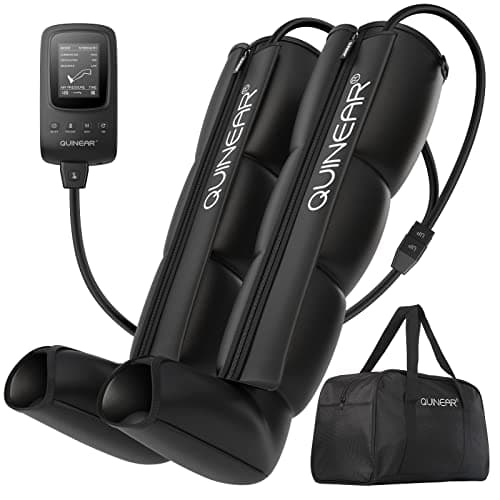
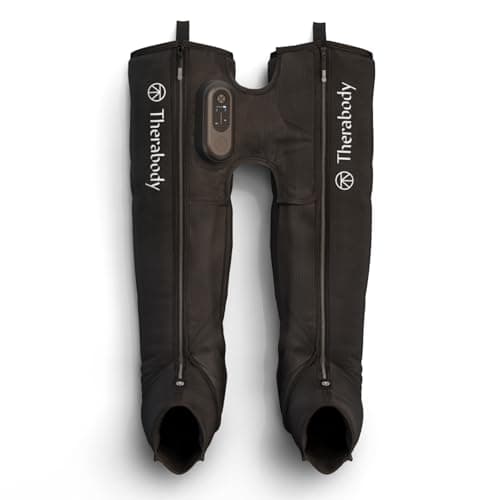
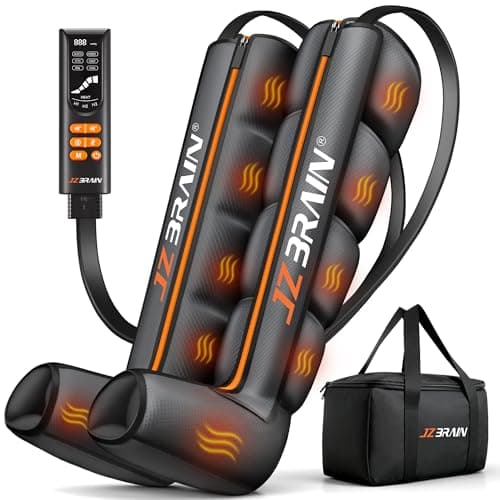
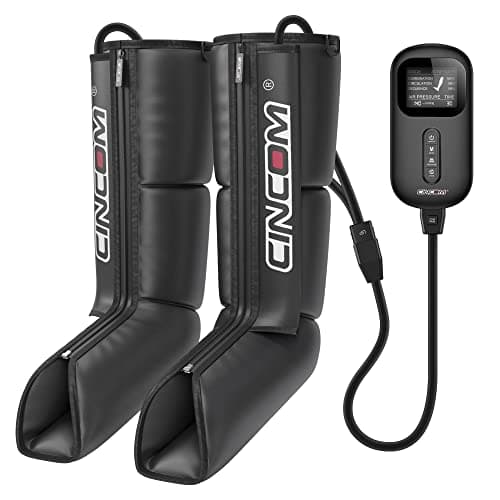
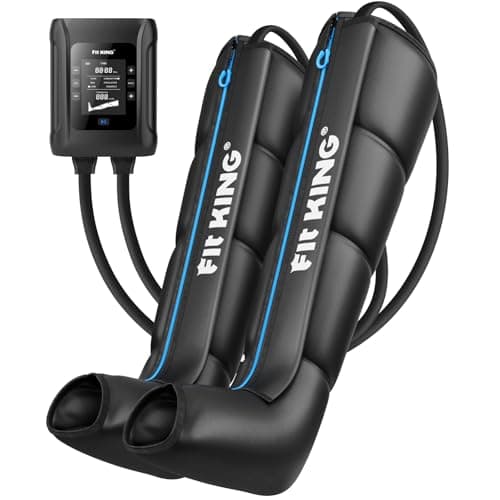
The Normatec alternative to buy is the FIT KING recovery system— four zones per leg against Normatec's five, a published 40-150 mmHg range, three modes and a built-in battery, for a fraction of the money. It is the right pick for anyone who wants sequential compression and does not want to spend flagship prices. The budget pick is the Cincom: three zones covering the foot and calf rather than the whole leg, but still a genuine sequential inflation from the foot upward rather than a single squeeze, and the cheapest way onto this shelf.
People search for a Normatec alternative for one reason: the price. That is a fair reason, and the honest version of this list starts by naming what Normatec actually gives you for it. Hyperice publishes the specification: five overlapping zones per leg, seven pressure levels reaching roughly 100 mmHg, a patented Pulse pattern that pre-molds the attachment to your leg at the start of a session, ZoneBoost for adding targeted pressure to one zone, and app control with no subscription— you own the hardware outright. The build and the feel are the best in the category. None of that is marketing; all of it is on Hyperice's own spec page, cited below.
What you do not have to give up by shopping elsewhere: sequential inflation, which every pick here does; a published pressure range, which three of them state in numbers; cordless operation, which the Normatec charges extra for as a separate battery pack and which two boots here include; or genuine four-zone coverage. Ranked below on how much of the Normatec feature set each one reproduces, and at what cost.
If you want the two specific head-to-heads rather than the whole field, we settle Normatec vs FIT KING and Normatec vs Therabody on their own pages. If price is the only constraint, the best budget compression boots list goes lower still.
What you actually give up by not buying a Normatec
Four things, and it is worth being precise. A fifth zone. Normatec runs five overlapping zones per leg; the best alternative here runs four. In practice the fifth zone buys a smoother hand-off up the leg rather than more coverage, but it is a real difference and it is the one nobody else matches. Pulse calibration.Normatec's patented pattern pre-molds the attachment to your leg at the start of each session instead of inflating to a fixed pressure; the alternatives inflate to a setting. ZoneBoost. Adding pressure to one chosen zone — useful if one calf is the problem — is a Normatec feature with no equivalent here. Support and resale. A used Normatec sells; a used generic does not, and Hyperice answers the phone.
What you do not give up: sequential compression itself, which is the mechanism that makes these devices worth owning at all and which every boot on this page performs. Nor portability — two of the picks here run on an internal battery, which the standard Normatec does not.
The spec that decides whether an alternative feels cheap
Zones, not maximum pressure. This is the spec people get wrong. A two-chamber boot that claims 150 mmHg does not feel like a Normatec at 70 mmHg, because what you are buying is the wave — pressure arriving at the ankle, holding, then handing off to the calf, then the thigh. Two chambers cannot make a wave; they make a squeeze. Four can.
The second spec is whether the pressure range is published at all. A listing that gives you a mmHg range is telling you what it will do to your leg. A listing that advertises “powerful massage” and no numbers is asking you not to ask. Three picks here publish a range; the ones that do not are ranked accordingly, and their cards say so.
Fit is the thing that ruins these, not pressure
Compression boots are sized garments with a pump attached, and the commonest regret in the category is a sleeve that does not close properly around the thigh or that stops short of the hip. Measure your inseam and your widest thigh circumference before you buy, and check the listing's stated length — the JZBRAIN pick is here specifically because it suits longer legs, and a boot that bunches at the knee delivers its wave into a crease rather than into your quad.
Before you buy any of them: the honest case for socks
If your reason for shopping is heavy, tired legs rather than hard training, a pair of graduated compression socks does most of what you want for roughly one per cent of the price of a Normatec, with no power and no setup. That is not a throwaway line — we make the argument properly in compression boots vs socks and rank the socks themselves in best compression socks. A pump earns its price when you train hard and recover often. It does not earn it as a first purchase for an ache.
And on evidence: the published work on pneumatic compression supports it for comfort, perceived recovery and swelling far more strongly than for performance the next day. We set out what the studies do and do not show in do compression boots work.