Skip to content
Rep & Recovery

Strength · Home Gym

Weighted vs speed jump rope

A weighted rope teaches you where the rope is. A speed rope assumes you already know. That one sentence decides which you should buy first, and most people buy in the wrong order.

By Stephen V.Updated How we review
#ad

We earn a commission when you buy through our Amazon links, at no extra cost to you. It never changes a verdict, and we say so when the cheaper product is the better buy. How this works.

If you are buying one rope and you are not already good at skipping, buy a lightly weighted one — around a pound of cable. The weight is not there to make it harder; it is there so you can feel where the rope is in the air, which is the entire skill. Our pick is the WOD Nation Attack Speed Jump Rope, because it ships with both a weighted and a speed cable and resizes without tools, so it answers this question by refusing to make you choose. If you want one cable and the lowest price, the Redify Weighted Jump Rope is the straightforward buy.

The confusion in this category comes from the word "weighted" covering two completely different products. A lightly weighted cable — about a pound — is a learning aid and a general cardio rope. A heavy rope— two to three pounds — is a conditioning tool that loads your shoulders, arms and grip, and it is barely the same exercise. Reviews that compare "weighted vs speed" without separating those two are comparing three things and calling it two.

A third category muddies it further: weighted handles, where the mass is in your hands rather than the cable. Those train grip and shoulders without changing how the rope flies, which means they do not help you learn and do not slow the turn. Useful, but not what either side of this comparison is about.

The short answer

Quick picks

#ProductBest forScorePrice
01
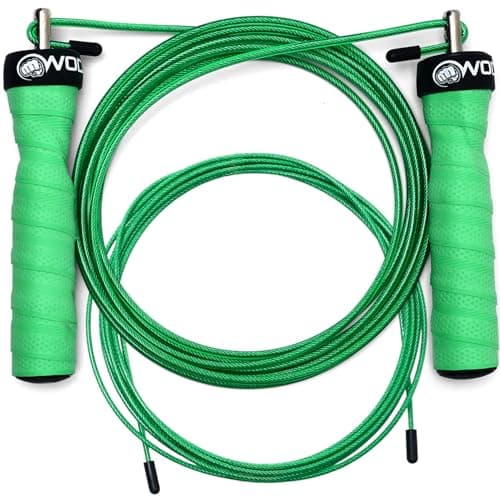
WOD Nation WOD Nation Attack Speed Jump Rope
WOD Nation Attack Speed Jump Rope

The rope that makes this decision unnecessary. Two cables in the box — a thin speed cable for fast, precise turns and a heavier weighted cable for building endurance — swapped and resized by a tool-free fold-over adjustment. Learn on the weighted cable, switch to the speed cable when your timing is solid, and never buy a second rope.

Best overall: both cables
8.0
$17.99Amazon
02
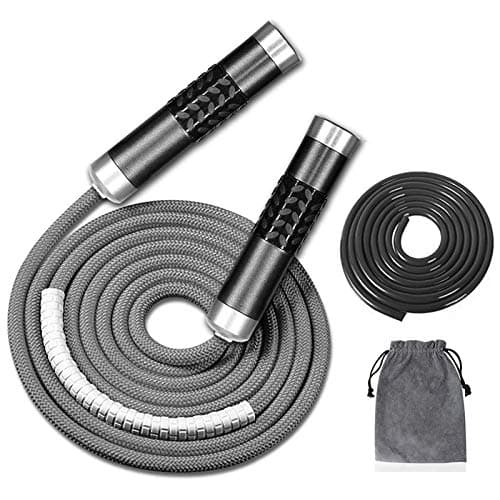
Redify Redify Weighted Jump Rope
Redify Weighted Jump Rope

The single rope most people should buy, and the clearest illustration of why weighted wins for beginners. About a pound of cable on smooth ball bearings — heavy enough that you can feel exactly where the rope is as you learn the timing, light enough to spin genuinely fast once you can. Tangle-free and adjustable in seconds.

Best weighted rope
7.8
$25.98Amazon
03
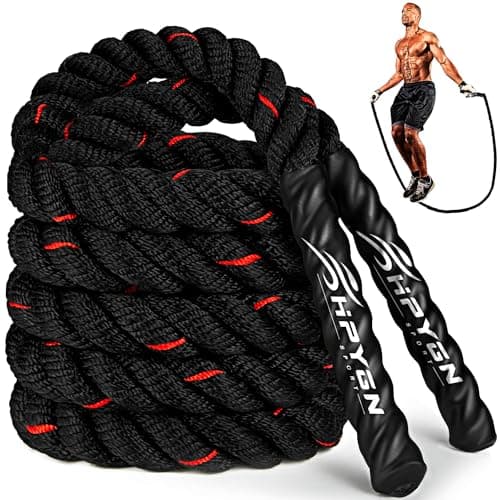
HPYGN HPYGN Heavy Weighted Jump Rope
HPYGN Heavy Weighted Jump Rope

The other thing the word weighted means. Around 2.8 lb of rope over roughly nine feet turns skipping into a shoulder, arm and grip workout as much as a cardio one. It is slow by design, which incidentally makes it forgiving for learning rhythm — but buy it for conditioning, not as a general-purpose rope.

Best heavy rope
7.2
$19.99Amazon
04
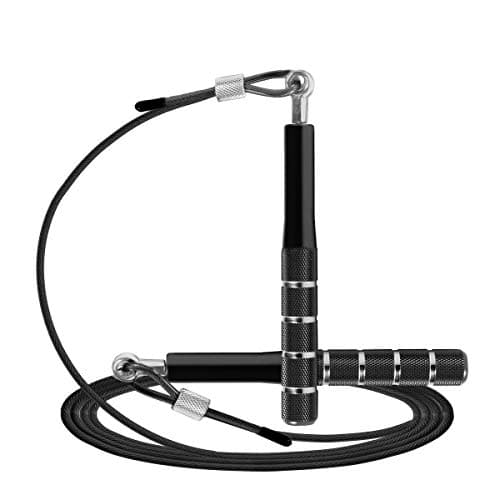
Wastou Wastou Speed Jump Rope
Wastou Speed Jump Rope

The speed side of the argument, at the lowest price it comes at. A thin, fast cable on ball bearings for a few dollars — nothing here turns quicker per dollar. Buy it once your timing is solid, or as the second rope you graduate onto. Buy it first and you will spend a fortnight whipping your own shins.

Best budget speed rope
6.8
$9.99Amazon

#ad · Live prices from the Amazon Product API, as of October 4, 2026. Where we have no verified live price, we show none — a gap beats a number that has rotted.

In detail

The picks, in full

01
WOD Nation WOD Nation Attack Speed Jump Rope

Best overall: both cables

WOD Nation Attack Speed Jump Rope

Dual cable: speed + weightedTool-free fold-over adjustmentAbout 0.5 lb with carry bagAdjustable length
8.0/10

The rope that makes this decision unnecessary. Two cables in the box — a thin speed cable for fast, precise turns and a heavier weighted cable for building endurance — swapped and resized by a tool-free fold-over adjustment. Learn on the weighted cable, switch to the speed cable when your timing is solid, and never buy a second rope.

Learning curve
7
Speed ceiling
10
Conditioning load
7
Durability
9
Value
7

Pros

  • Both cable types included, which is the honest answer to weighted-versus-speed
  • Fast, consistent turn that handles double-unders once you get there
  • Fold-over adjustment resizes a cable in seconds without cutting or tools
  • The rope CrossFit gyms keep recommending, for the double-under reason

Cons

  • Neither cable is a true heavy rope — this is not a conditioning tool
  • Costs more than a single-cable rope, which is the price of not choosing

Don't buy this if…

…you want the shoulder-and-grip burn of a genuinely heavy rope — half a pound of system weight is not in that conversation, and the HPYGN below is.

The case for a dual-cable rope is that the weighted-versus-speed question has a different answer at month one and month six. In month one you need to feel the cable to build the timing; by month six that feedback is slowing you down and a thin cable is faster and more precise. A rope that swaps between the two covers the whole arc of learning for the price of one and a bit.

The fold-over adjustment matters more than it sounds. Most ropes are sized by cutting the cable, which is permanent and unforgiving; this one folds the excess back on itself and clamps it, so you can resize for a different user or a different shoe height in seconds, and undo it.

$17.99View on Amazon

Price as of October 4, 2026. Prices change — Amazon's at checkout is the one that counts.

#ad · we may earn a commission from this link to WOD Nation Attack Speed Jump Rope

02
Redify Redify Weighted Jump Rope

Best weighted rope

Redify Weighted Jump Rope

~1 lb weighted cableBall-bearing handlesTangle-free coated cableAdjustable length
7.8/10

The single rope most people should buy, and the clearest illustration of why weighted wins for beginners. About a pound of cable on smooth ball bearings — heavy enough that you can feel exactly where the rope is as you learn the timing, light enough to spin genuinely fast once you can. Tangle-free and adjustable in seconds.

Learning curve
9
Speed ceiling
7
Conditioning load
6
Durability
8
Value
9

Pros

  • A pound of cable is the sweet spot: enough feedback to learn, not enough to slow you
  • Ball bearings spin smoothly and keep the cable from twisting up
  • Adjustable to any height in seconds, no cutting
  • Cheapest route to the learning benefit this page is about

Cons

  • Slower top-end turn than a true speed cable — double-unders are harder
  • A coated cable scuffs on concrete faster than a bare steel one

Don't buy this if…

…you already skip confidently and want to chase double-unders — the cable weight that helped you learn is now the thing capping your speed.

$25.98View on Amazon

Price as of October 4, 2026. Prices change — Amazon's at checkout is the one that counts.

#ad · we may earn a commission from this link to Redify Weighted Jump Rope

03
HPYGN HPYGN Heavy Weighted Jump Rope

Best heavy rope

HPYGN Heavy Weighted Jump Rope

~2.8 lb heavy rope~9.2 ft lengthFoam-padded handlesStrength-cardio tool
7.2/10

The other thing the word weighted means. Around 2.8 lb of rope over roughly nine feet turns skipping into a shoulder, arm and grip workout as much as a cardio one. It is slow by design, which incidentally makes it forgiving for learning rhythm — but buy it for conditioning, not as a general-purpose rope.

Learning curve
8
Speed ceiling
3
Conditioning load
10
Durability
7
Value
8

Pros

  • Genuinely loads the shoulders, arms and grip — a different stimulus from any light rope
  • Slow turn is surprisingly forgiving if your rhythm is still developing
  • Builds the upper-body endurance that makes long light-rope sets easier
  • Foam handles are necessary at this weight and are included

Cons

  • Far too slow for double-unders or any speed work
  • Sets are short — this fatigues the upper body before the legs

Don't buy this if…

…this is your only rope — a heavy rope is a supplement to light-rope work, not a replacement for it, and using it as a daily cardio tool will wear out your shoulders.

$19.99View on Amazon

Price as of October 4, 2026. Prices change — Amazon's at checkout is the one that counts.

#ad · we may earn a commission from this link to HPYGN Heavy Weighted Jump Rope

04
Wastou Wastou Speed Jump Rope

Best budget speed rope

Wastou Speed Jump Rope

Thin speed cableBall-bearing handlesAdjustable lengthLowest cost here
6.8/10

The speed side of the argument, at the lowest price it comes at. A thin, fast cable on ball bearings for a few dollars — nothing here turns quicker per dollar. Buy it once your timing is solid, or as the second rope you graduate onto. Buy it first and you will spend a fortnight whipping your own shins.

Learning curve
5
Speed ceiling
9
Conditioning load
4
Durability
6
Value
10

Pros

  • Fast, smooth cable that spins as quickly as you can turn it
  • Costs about as little as a usable rope can
  • Adjustable to fit any height
  • The right tool for double-unders and high-rep speed sets

Cons

  • No feedback at all — a thin cable is invisible to your hands as you learn
  • Light cables tangle and kink more readily than weighted ones

Don't buy this if…

…you are starting from scratch — this is the rope that makes people decide they cannot skip, when the actual problem is that they cannot feel it.

$9.99View on Amazon

Price as of October 4, 2026. Prices change — Amazon's at checkout is the one that counts.

#ad · we may earn a commission from this link to Wastou Speed Jump Rope

The three rope types, side by side

Speed ropeLightly weighted (~1 lb)Heavy rope (2-3 lb)
What it trainsFootwork, speed, conditioningGeneral cardio, rhythm, coordinationShoulders, arms, grip, power endurance
Feedback while learningAlmost noneClear — you feel the cable positionVery high, but slow
Double-undersYes — this is the toolPossible, harderNo
Typical set lengthLongLongShort — upper body fatigues first
Right first rope?NoYesNo

Weights and lengths above are the manufacturer-published figures from the listings in Sources. The training characterizations are judgments from how each cable behaves, not measurements — we have not instrumented anybody's shoulder.

Why weight helps you learn

Skipping is a timing skill, and timing needs feedback. A one-pound cable has enough momentum that your hands can feel where the rope is through the whole arc — bottom, side, overhead — so your brain gets a continuous signal to time the jump against. A thin speed cable gives you almost nothing until it hits your shins, which is feedback of a less useful kind.

That is the entire argument, and it is why the common buying order is backwards. People buy a speed rope because speed sounds like the goal, struggle for two weeks, and conclude they are bad at skipping. The rope was wrong. Learn on weight, graduate to speed — which is precisely the progression a dual-cable rope lets you do without a second purchase.

Where the heavy rope actually fits

A 2-3 lb rope is not a harder version of a light rope; it is a different exercise. The load lands on your shoulders, upper back and grip, and sets end when those fail rather than when your legs or lungs do. That makes it a genuine conditioning tool and a poor daily cardio one. Used two or three times a week alongside a light rope, it builds the upper-body endurance that makes long light-rope sets feel easy. Used as your only rope, it will wear out your shoulders before it does much for your conditioning.

Sizing, surface and the ceiling problem

Length. Stand on the middle of the cable; the handles should reach roughly to your armpits. Too long and the rope slaps the floor and slows; too short and it catches your head. Prefer a rope that adjusts by folding or clamping over one that requires cutting — cutting is permanent, and your first guess will be wrong.

Surface. Coated cables scuff on concrete and bare steel ones last longer but mark floors. A mat solves both. Hardwood is kind to the cable and unkind to your downstairs neighbor, which is the same consideration that drives the noise ranking in best home cardio machines.

Ceiling height. Standard rooms are usually fine; basements and low-ceilinged apartments are not, and that is the one constraint no rope type solves. The cordless option in our jump rope roundup exists for exactly that problem — weighted balls on short tethers, no cable to catch.

Which one, in one line each

  • New to skipping: lightly weighted, about a pound. Not negotiable; it is the fastest route to competence.
  • Chasing double-unders or speed work: a thin speed cable, and nothing else will do.
  • Want upper-body conditioning: a heavy rope, two or three sessions a week, alongside a light one.
  • Buying one rope for the next two years: a dual-cable rope, which is why it is ranked first.

A rope is also the cheapest serious cardio in a home gym, which is why it sits near the front of home gym on a budget and why we suggest buying one before any machine. Twenty dollars and four square feet buys a genuine conditioning tool; the machines in this hub start at twenty times that.
How we picked

We did not lab-test this gear

Everyone in this category says they tested twenty products. We have not lab-tested any of these, and we say so. What we did instead: compiled the published specifications, pulled the numbers from the manufacturer manuals, ran the cost-to-run and cost-per-unit math where there was math to run, and scored each product against a published rubric. The scores are judgments from documented research — not measurements we took, because we do not have a lab and we will not pretend we do. Where a number came from someone else's work, we name them in Sources.

Questions

Frequently asked

Is a weighted jump rope better than a speed rope?
For learning, yes — and that is the case that matters for most buyers. A cable of roughly a pound gives your hands continuous feedback about where the rope is, which is the whole skill of skipping. A speed rope gives you almost none until it hits your shins. Once your timing is solid the answer flips, and a thin cable is faster and more precise.
What weight jump rope should a beginner use?
About one pound of cable. That is heavy enough to feel through the whole arc and light enough to still spin quickly as you improve. Avoid the 2-3 lb heavy ropes as a first rope: they are a shoulder and grip conditioning tool, and the sets end when your upper body fails rather than when your legs do.
Do weighted jump ropes build muscle?
A heavy rope in the 2-3 lb range loads the shoulders, upper back and grip enough to build real endurance there, which is why sets are short. A one-pound cable does not — it is a cardio and coordination tool, and the weight is there for feedback rather than for load. Neither is a substitute for resistance training.
Can you do double-unders with a weighted rope?
With a one-pound cable it is possible and harder; with a 2-3 lb heavy rope it is effectively out. Double-unders need rope speed, and cable mass is the thing working against you. If double-unders are the goal, learn the timing on a weighted cable and switch to a thin speed cable to actually chase them — which is the argument for a dual-cable rope.
What is the difference between a weighted cable and weighted handles?
Where the mass sits, and it changes everything. Weight in the cable alters how the rope flies, which is what gives you feedback and slows the turn. Weight in the handles trains grip and shoulders while the rope behaves exactly as it did before — so handles do not help you learn and do not slow you down. They are a different product solving a different problem.
How do I size a jump rope?
Stand on the middle of the cable and pull the handles up: they should reach roughly to your armpits. Too long and the rope drags and slows; too short and it clips your head. Choose a rope that adjusts by folding and clamping rather than one you have to cut, because cutting is permanent and your first estimate will be wrong.

Keep reading

Receipts

Sources

We do not run a testing lab, and we do not pretend to. Where a measured number came from someone else's work, we name them and link them. Where we could not verify something, we say so on the page rather than quietly leaving it out. Read our full method.