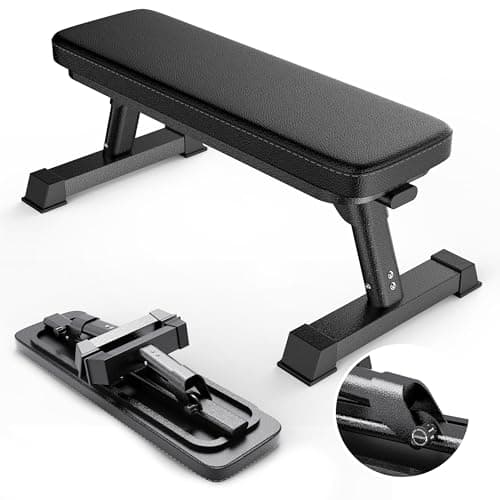
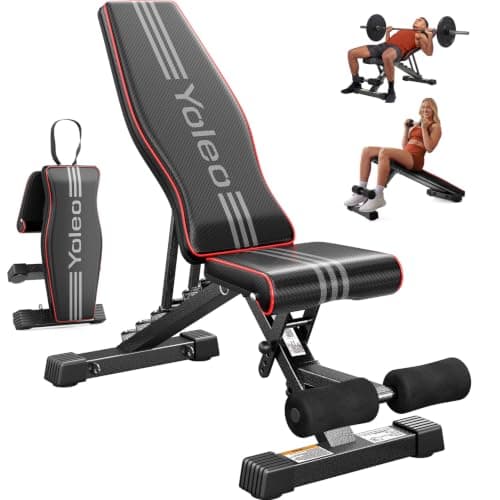
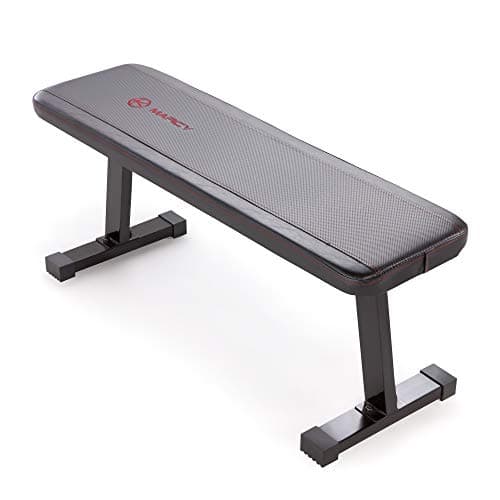
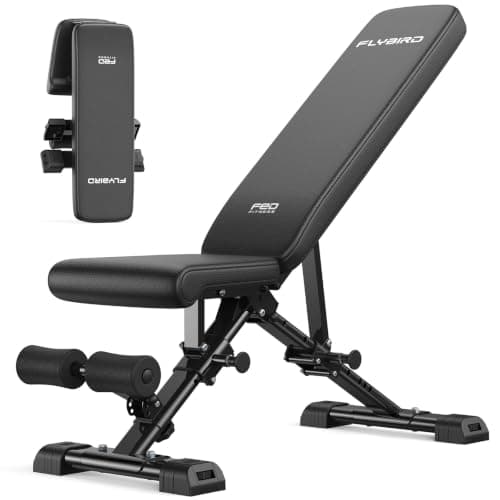
Under $200 the bench to buy is the FLYBIRD WB5. It adjusts from flat through several incline positions to a decline, carries an ASTM-certified 800 lb rating, and folds flat to slide behind a door — which makes it the right buy for anyone pressing dumbbells in a room that has to be a room again afterwards. If you only ever press, row and do dumbbell work, a flat bench is the more planted object for the money and the Finer Form foldable flat bench carries the highest rated capacity here at 1,000 lb. The budget pick is the YOLEO adjustable bench — the cheapest thing here that still inclines, and it is 98 percent assembled in the box.
Price check · as of November 24, 2026
Every pick below sat under $200 at Amazon when our price layer last ran, on November 24, 2026 — 4 of 4 carry a live price right now, shown in the table and on each card. Amazon prices move daily and a listing can cross the line between our check and your click, so the number on Amazon is the one that counts.
A $200 ceiling buys a genuinely good bench, which is not true of most categories in a home gym. What it does not buy is both of the two things benches are good at.
Adjustability means a ladder or a pin that sets the backrest from decline through flat to steep incline, so one bench covers flat press, incline press, shoulder press and seated work. The cost is a mechanism: more parts, a small amount of movement under load, and a seam where the back pad meets the seat pad.
Planted flat stability is what a fixed bench buys instead. Nothing adjusts, nothing can rattle, the pad is one continuous surface, and the frame can be simpler and heavier for the same money. The cost is that it does exactly one job.
The number that separates the serious from the flimsy at this price is the published load rating, and the detail worth knowing is who published it. Two benches here carry an ASTM-certifiedrating — tested to a published standard — and two carry a manufacturer's own rated capacity. Both numbers are real; one has a test behind it. Either way, read a rating as your body weight plus the bar, not as a target, and leave headroom.
Ranked below on what the rating is and who certified it, then on adjustability, then on how the bench stores. The full shelf including the heavier non-folding benches above this ceiling is in best weight benches, and if a bench is the second thing you are buying rather than the first, home gym on a budget sets the order.
How to read a published load rating
Every bench here publishes a capacity, and the figures run from 600 lb to 1,000 lb. Three rules make them useful. First, the rating includes you. It is the total load on the frame: body weight plus whatever is in your hands, so a 200 lb lifter pressing a pair of 60s is applying roughly 320 lb. Nobody under $200 is near a 600 lb ceiling. Second, who tested it matters.An ASTM-certified rating has been tested against a published standard; a “rated capacity” is the manufacturer's own claim. Both are real numbers and we print both, but the certified ones are the ones we rank highest on this axis. Third, a rating says nothing about wobble. Lateral stability comes from frame geometry and foot spread, not from vertical capacity, and it is the thing to check in buyer photos rather than on a spec sheet. We have not load-tested any of these benches ourselves.
The pad gap, and why short torsos should care
Every adjustable bench has a seam where the back pad ends and the seat pad begins. On a flat bench there is no seam at all. If the gap lands under your lower back, a heavy press gets unpleasant fast, and the shorter your torso the more likely that is. There is no spec for this — it is the single best reason to look at real buyer photos of someone your size lying on the bench before you order. If a continuous pad matters more to you than incline positions, buy one of the two flat benches here and spend the difference on dumbbells.
Folding is not a nice-to-have in a shared room
Three of the four benches here fold or move easily, and that is deliberate: the bench that gets used is the one that does not have to be stepped around for the rest of the week. A folding bench stands against a wall at roughly the depth of a bookshelf. A fixed utility bench is furniture. If the room has another job — a bedroom, a lounge, a nursery — the folding frame is worth more than the extra planted feel of a fixed one, and the same logic runs through home gym for small spaces.
What $200 does not buy
A commercial-width pad (these are narrower than a gym bench, which is a real difference on a wide-grip press), a zero-gap design, a leg-extension or preacher attachment worth using, or the mass of a non-folding steel utility bench. It also does not buy a rack — and this is the thing to be honest about: a bench under $200 is a dumbbell bench. Barbell bench pressing without a rack or spotter arms is the single most dangerous thing people do in a home gym, and the cheapest safe way to press a barbell is a rack with catches, which we rank in best power racks.
Which of the two benches you actually need
Buy adjustable if you want to press at an incline, do seated shoulder work, or train with one bench for everything. That is most people, and it is why the two adjustables rank first and third here.
Buy flat if your program is flat press, rows, hip thrusts and step-ups, you are heavier, or you simply want the most planted object for the money. A flat bench at this price is a better-built object than an adjustable at the same price, because the money went into steel instead of a mechanism.
How we price-check this page
The $200 ceiling is checked against our live price layer, and the stamp near the top of this page carries the date of the last confirmed check. Amazon prices move daily, so a bench can cross the line between our check and your click — the number on Amazon is the one that counts. Where we hold no verified price, the buttons read “Check price” rather than showing a figure that has rotted. Specs are the manufacturers' own published figures; we have not tested these benches in a lab and we do not claim to.