Best overall
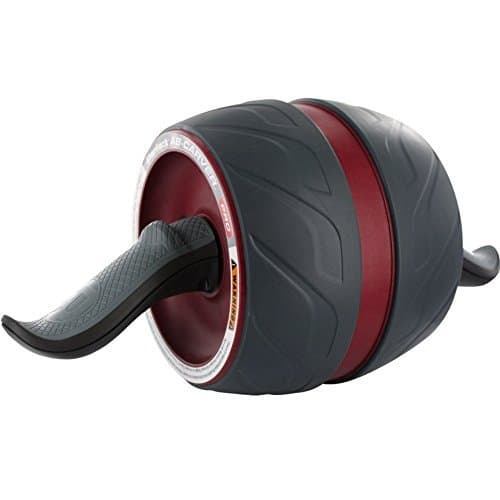
Perfect Fitness Ab Carver Pro
The ab wheel most people should buy. A built-in spring assists the return from the bottom, taking the edge off the hardest part, and the wide, contoured wheel lets you angle the rollout to bias each side. The most controllable wheel here.
- Stability
- 9
- Control / assist
- 9
- Comfort
- 8
- Build quality
- 8
- Value
- 8
Pros
- Internal spring assists the return, making rollouts achievable sooner
- Wide, curved wheel is stable and allows angled 'carving'
- Comfortable, kinetic grips reduce wrist strain
- Comes with a knee pad, so nothing else to buy
Cons
- Costs more than a plain wheel
- The spring assist is modest — this is still a hard exercise
Don't buy this if…
…you want the absolute cheapest wheel and do not need the return assist — the budget pick does the core job for less.
The Ab Carver Pro earns the top spot by solving the two things that make ab wheels hard to use well. The built-in spring stores a little energy at the bottom of the rollout and gives it back on the way up, so the brutal return phase is a touch more forgiving — that is the difference between a beginner managing a few clean reps and collapsing flat. And the wide, contoured wheel is stable enough to let you steer the rollout slightly left or right to emphasize each side.
It is not magic — a rollout is still one of the hardest bodyweight movements there is, and the spring only assists — but for the money it is the most usable, most controllable ab wheel on the list, and it ships with the knee pad you would otherwise buy separately. We go deeper on the spring, the conflicting EMG evidence and who should skip it in our full Ab Carver Pro review.
$44.9913% off
Price as of October 19, 2026. Prices change — Amazon's at checkout is the one that counts.
#ad · we may earn a commission from this link to Perfect Fitness Ab Carver Pro