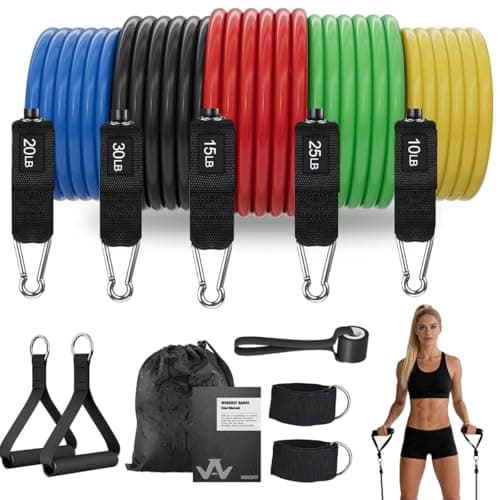
If you are buying one set of bands to train with, buy tube bands with handles — the WHATAFIT Resistance Bands Set is the one we would get. Five stackable tubes reaching a combined 150 lb, plus a door anchor and ankle straps, is a genuine full-body gym in a bag. Loop bands are excellent and cheap and will not do that job: mini loops top out far too light to build strength, and long loops are a specialist tool for pull-up assistance and heavy stretching.
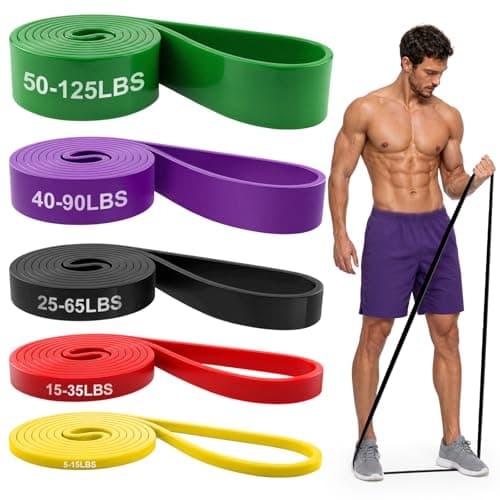
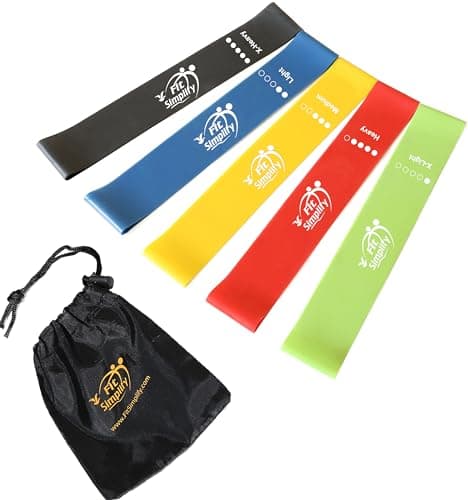
The reason this comparison confuses people is that "resistance bands" is three products sharing a shelf. Mini loops are 12-inch latex circles for warm-ups and glute work. Long loops are big continuous bands you hang off a bar. Tube bands are lengths of rubber tubing with clips, handles, anchors and straps. They overlap in price and in almost nothing else.
So the useful question is not which format is better. It is which job you are buying for: load a press and a row, activate a hip before you squat, or take weight off a pull-up. Below is each format scored on exercise coverage, strength range, comfort, durability and value — and then the honest note about where all three sit against actual iron.
The three formats, side by side
| Mini loops | Long loops | Tube bands + handles |
|---|
| Typical resistance | Light to moderate | ~5 to 125 lb per band | 10-50 lb per tube, stacks to 150 lb |
| Best at | Warm-ups, glute activation, rehab | Pull-up assist, heavy stretching | Press, row, curl, leg work — full body |
| Needs an anchor point? | No | Yes — a bar | A door anchor is included |
| Comfort in the hands | n/a — worn on the limbs | Poor under load — bare band | Good — cushioned handles |
| Can it be your only kit? | No | No | Yes, within limits |
| Rough cost | Lowest | Low | Low |
Resistance figures are the manufacturer-published ratings from the listings in Sources. Band ratings across this category are nominal rather than calibrated — two brands labelled 30 lb will not feel identical — so treat them as a ladder within one set rather than an absolute number you can compare across brands.
The resistance-curve problem nobody mentions
A dumbbell is heaviest where you are weakest — at the bottom of a curl, the chest of a press. A band is the opposite: slack and easy at the start, hardest at full stretch, where you have the most leverage. That is not a defect, it is a different strength curve, and it has two real consequences.
It makes bands excellent for movements where you are strongest at the end — pull-aparts, lateral walks, triceps extensions, rear delt work — and frustrating for movements where you need load at the bottom, like a squat. And it means a "50 lb" band is not 50 lb through the rep; it is 50 lb somewhere near the end of it. Keep that in mind before concluding you can press as much with bands as with iron, and read dumbbells versus resistance bands if that comparison is the actual decision you are making.
Latex, TPE and which one you want
Most cheap bands are natural latex: strong, elastic, durable, and a problem for anyone with a latex sensitivity. TPE is the synthetic alternative — odorless, hypoallergenic, generally a little less durable under the same load. If latex is a known issue for you, that single spec narrows the field before anything else does. If it is not, latex is the better material for hard use, and the smell fades.
Caring for bands so they do not fail mid-rep
Bands fail at nicks, and they fail suddenly. Three habits: inspect the full length for cuts and crazing before you load one heavily; keep them out of direct sunlight, which degrades both latex and TPE; and never anchor a band to anything sharp or anything that can come loose. Door anchors are designed for the door closing towards you — hooking a band on a handle instead is how people take a buckle to the face. Replace anything nicked rather than nursing it along; a band is the cheapest thing in the gym and the one most likely to let go under tension.
So which do you buy?
- One set to train with: tube bands with handles, door anchor and ankle straps. This is the only format that covers a full body.
- Warm-ups and glute work before lifting: mini loops. They cost almost nothing, and nothing else does the job as well.
- Working towards a pull-up: long loops, and a bar to hang them from — see best pull up bars.
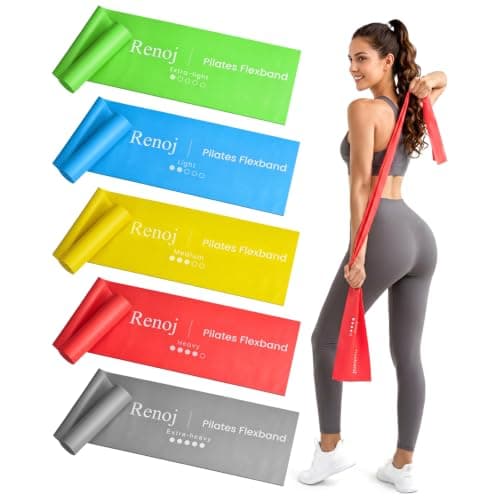
- Latex sensitivity or rehab work: flat TPE bands, accepting the lower ceiling.
The genuinely good news in this category is the price. All four sets together cost less than one adjustable dumbbell, which is why bands open every budget build we write — including home gym for beginners and home gym for small spaces. Buying the wrong format is a cheap mistake. It is just an avoidable one.