If you can only buy one free weight to start, the honest answer depends on what you want. A dumbbell is the more versatile pure-strength tool — it presses, curls, rows and lunges cleanly, and a pair lets you load both sides evenly. A kettlebell is the better conditioning and power tool — its offset handle and hanging weight make the swing, the clean and the goblet squat feel natural in a way a dumbbell never quite does. They overlap enormously; the differences are real but smaller than the internet claims.
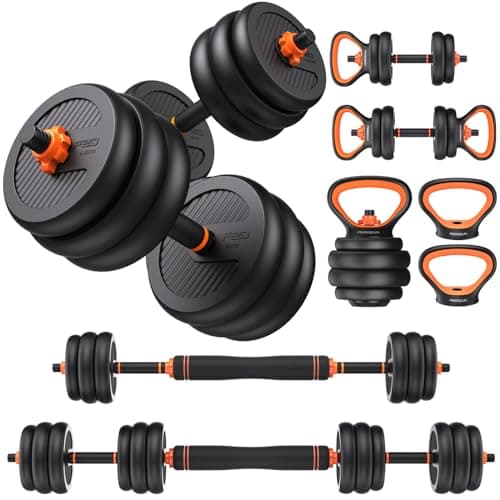
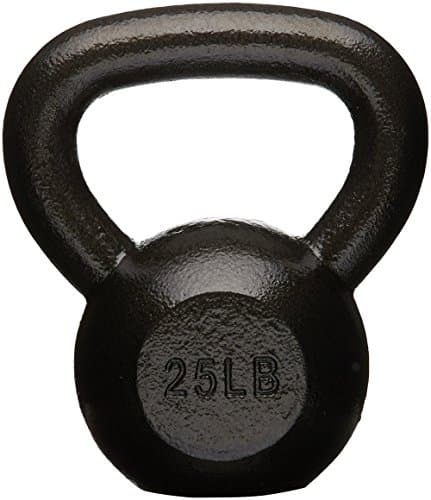
Below we compare them honestly, then name a starting pick for each: an Amazon Basics cast-iron kettlebell and a set of FEIERDUN adjustable dumbbells, both real, both currently available. For the full ranked lists, see our best kettlebells and best adjustable dumbbells roundups.
What a dumbbell does better
Dumbbells win on pure strength versatility and even loading. Because the weight sits in line with your hand, a dumbbell is ideal for pressing (flat, incline, overhead), curls, rows and single-leg work, and a matched pair lets you train both sides equally — important for building balanced strength. Adjustable dumbbells also scale in small increments, so you can add a little weight as you get stronger, which matters more for hypertrophy and progressive overload than any handle shape.
What a kettlebell does better
Kettlebells win on ballistic, conditioning and grip work. The offset center of mass — the weight hangs below the handle — is what makes the swing, the clean, the snatch and the Turkish get-up flow; those movements build power and cardio in a way slow dumbbell reps do not. The thick handle hammers your grip, and a single well-chosen bell can run an entire conditioning session. If your goal is fat loss, work capacity and athletic power rather than maximal muscle size, a kettlebell is the more fun and more specific tool.
Which should you buy first?
Buy the tool that matches your primary goal. Chasing strength and muscle? Start with a pair of adjustable dumbbells — the versatility and even loading serve you better. Chasing conditioning, power and simplicity? Start with one kettlebell — it is cheaper to begin, takes almost no space, and a single bell does a lot. Most people who stick with training end up owning both, because they solve different problems; but you do not need both on day one.