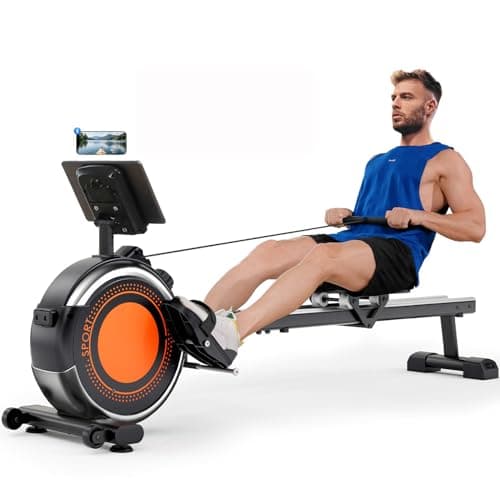
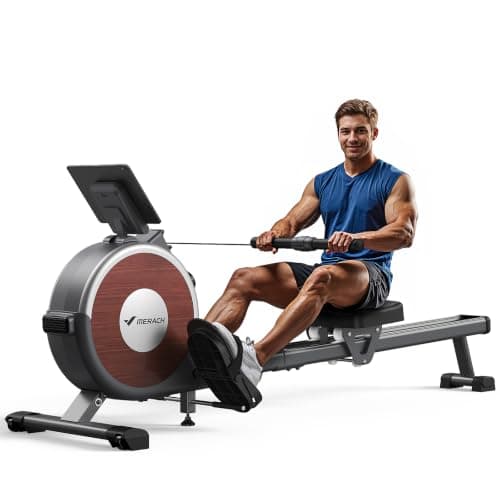
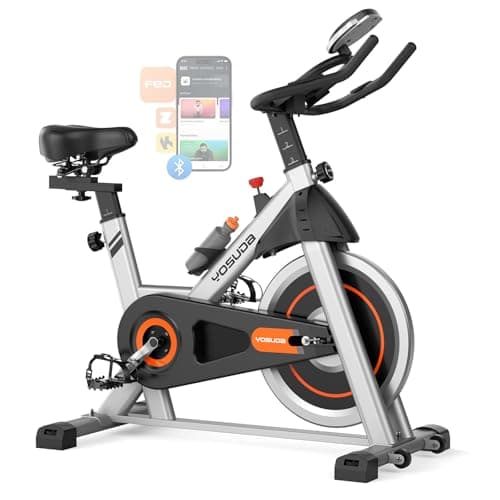
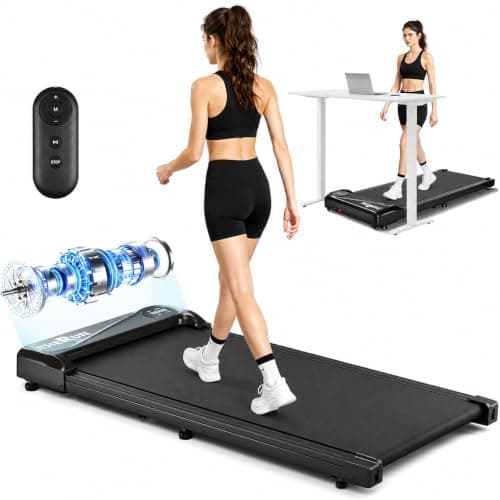
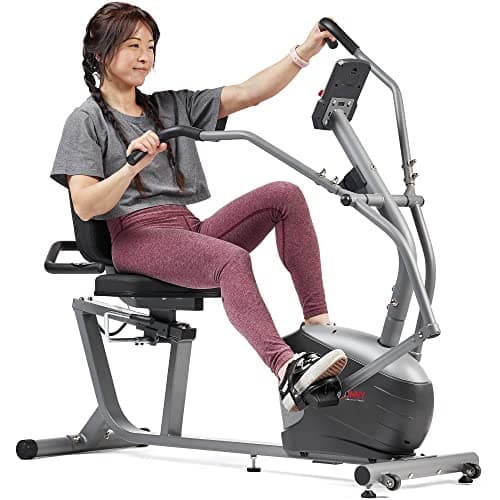
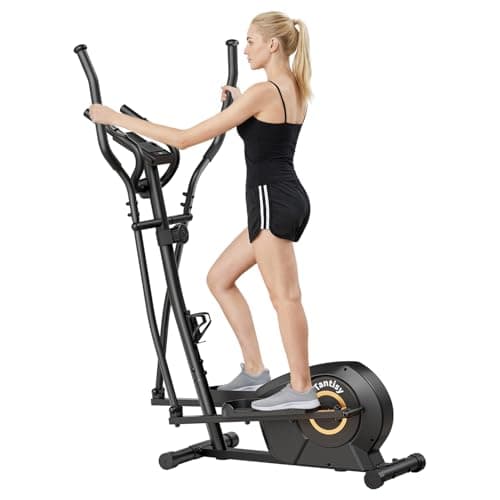
The best machine for a heavier beginner is the TANTISY elliptical, rated for users up to 400 lb. It is the highest published capacity in our registry at the lowest price, the stride is 15.5 inches so it moves like walking rather than shuffling, and it is sold specifically on being quiet enough for an apartment — the right buy for someone who wants weight-bearing exercise with no impact through the knees. If sitting down is the safer place to start, the Dripex magnetic rower, rated to 360 lb, works your whole body with your weight fully supported. The budget pick is the THERUN walking pad — the cheapest thing here that does the job, and it publishes a 300 lb capacity, which most cheap pads quietly do not.
This page is ranked on one number before anything else: published user-weight capacity. It is a structural rating from the manufacturer, and it is a gate rather than a feature — a machine rated to 265 lb is the wrong machine for a 280 lb rider no matter how good its reviews are, and using one over its limit is how frames bend, bearings fail and people get hurt. Most fitness marketing treats capacity as fine print. For this reader it is the first spec, so we print it on every card, and we flag the one pick here whose rating rules it out for a lot of people reading.
The second axis is joint load. Body weight multiplies through the knee and hip in any impact movement, which is why running is the worst possible starting point and why nothing on this page has impact. Elliptical and walking-pad work is weight-bearing without impact; rowing and cycling take the weight off the joints entirely. The third axis is access — whether you can get on and off easily, whether there is something to hold, and whether the seat is wide enough to sit on comfortably, which is the detail that quietly decides whether a machine gets used twice.
Two honest notes. First, the standing guidance for adults is 150 minutes a week of moderate activity plus two strengthening sessions, and the version of that which works is the one you will repeat — ten minutes a day on a machine you like beats a program you abandon. Second, if you have knee, hip or back pain, or any heart or breathing condition, talk to a clinician before you start, and bring the machine with you in the conversation. We also rank gear specifically for painful knees in best exercise equipment for bad knees.
Weight capacity: how to read the number
Published user capacity is the manufacturer's structural rating for the frame, bearings and deck. Three rules make it useful. First, treat it as a ceiling, not a target — a machine run constantly near its limit wears out at the limit, so leave yourself headroom where you can. Second, a missing figure is a red flag; budget cardio equipment that does not publish a capacity usually does not publish it for a reason. Third, capacity says nothing about fit: seat width, stride length and handlebar reach are separate questions, and a 400 lb frame with a narrow saddle is still uncomfortable. We have not load-tested any of these machines — every figure on this page is the brand's own.
Why nothing here has impact
Each step in a run sends a force of several times body weight through the knee and hip, and that multiplier is the reason running is the wrong first choice for a heavier beginner even though it is free. Everything on this page removes or reduces it. Rowing and cycling remove body weight from the joints entirely — your weight is on a seat. Elliptical and walking keep you upright, which is good for bone and balance, but without the airborne phase that creates the impact spike. Ranked by how little they ask of a painful knee, the order is rower and recumbent first, elliptical second, walking pad third.
The specs nobody lists that decide whether you keep using it
Seat width. A standard spin saddle is narrow by design. A gel seat cover costs a few dollars and is the difference between a bike you ride and a bike you resent; the recumbent and the rowers avoid the problem entirely.
Something to hold. Fixed handles on an elliptical or a handrail on a treadmill matter a great deal in the first fortnight. The walking pad here has neither, which is its honest weakness.
Step-over height. Getting a leg over a bike frame is harder than walking through a recumbent, and it is the single commonest reason a machine goes unused.
Assembly. Two picks here arrive in a box and need building; the walking pad does not. If nobody is available to help, that is a real factor and not a trivial one.
Strength matters as much as cardio, and costs almost nothing
The adult guidance is not cardio alone — it is two strengthening sessions a week covering the major muscle groups, and that is the part that protects joints by building the muscle around them. For a beginner, a set of resistance bands with a door anchor does this for the price of a takeaway, with no weight limit and no floor space; we rank them in best resistance bands, and the seated-and-supported versions in best resistance bands for seniors. Sitting down to press and row is a perfectly good way to start.
What this page will not tell you
How much weight a machine will make you lose. Nobody knows, the honest literature is clear that exercise alone is a weak lever on body weight compared with its effect on fitness, blood pressure and mood, and any page that gives you a number is making it up. What these machines reliably do is make you fitter and stronger, and that is worth having on its own terms.